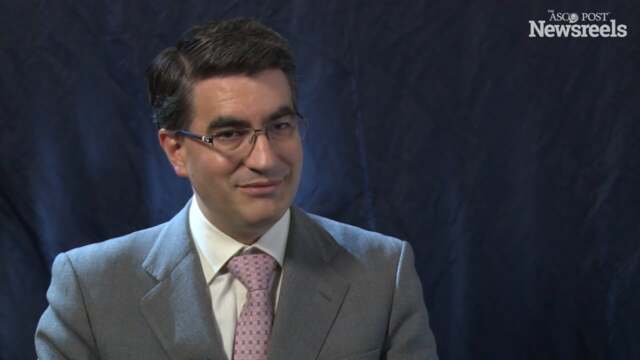
Robert J. Motzer, MD, on Phase III Results of CheckMate 025 Nivolumab vs Everolimus in Advanced RCC
2015 European Cancer Congress
Robert J. Motzer, MD, of Memorial Sloan Kettering Cancer Center, discusses the results of this study, which could well change the treatment paradigm in patients with previously treated metastatic renal cell carcinoma (Abstract 3LBA).
M. Catherine Pietanza, MD
M. Catherine Pietanza, MD, of Memorial Sloan Kettering Cancer Center, discusses rovalpituzumab tesirine, a promising DLL3-targeted antibody drug conjugate, the first precision treatment for small cell lung cancer (Abstract 7LBA).
Michel Ducreux, MD, PhD
Michel Ducreux, MD, PhD, of the Institut Gustave Roussy, discusses the efficacy and safety in this study of nab-paclitaxel in patients with previously treated metastatic colorectal cancer (Abstract 2131).
Brian I. Rini, MD
Brian I. Rini, MD, of the Cleveland Clinic Taussig Cancer Institute, discusses the results from a phase III study investigating a multipeptide cancer vaccine in patients receiving sunitinib as first-line therapy for advanced/metastatic renal cell carcinoma (Abstract 17LBA).
Christoph Zielinski, MD
As Chair of the ECC Local Organizing Committee, Christoph Zielinski, MD, of the Medical University Vienna - General Hospital, shares his thoughts on the important goals and presentations of the 2015 Congress.
Jean-Charles Soria, MD, PhD
Jean-Charles Soria, MD, PhD, of Gustave Roussy, summarizes an important study: afatinib vs erlotinib in squamous cell carcinoma of the lung.