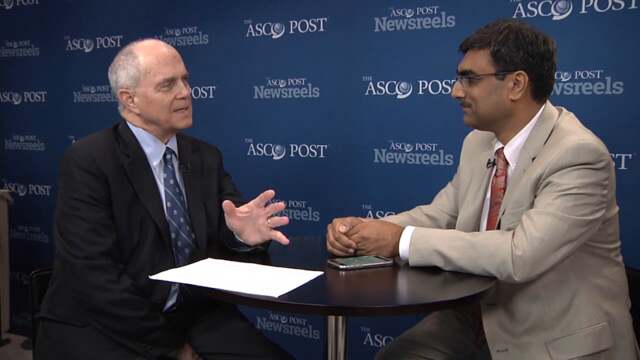
Chloe Evelyn Atreya, MD, PhD, and Axel Grothey, MD
Chloe Evelyn Atreya, MD, PhD, of the University of California, San Francisco, talks with Axel Grothey, MD, of the Mayo Clinic, about new data on trametinib, dabrafenib, and panitumumab in patients with the BRAF V600E mutation and vemurafenib plus irinotecan and cetuximab in BRAF-mutated metastatic colorectal cancer (Abstracts 103 and 3511).
John L. Marshall, MD
John L. Marshall, MD, of Georgetown University, discusses how the cost of care affects behavior and decision-making on the part of patients and oncologists.
Tony Mok, MD, and James O. Armitage, MD
James O. Armitage, MD, of the University of Nebraska Medical Center, and Tony Mok, MD, of The Chinese University of Hong Kong, discuss oncology from an international point of view.
James H. Doroshow, MD
James H. Doroshow, MD, of the National Cancer Institute, describes a new precision medicine initiative called the MATCH trial: Molecular Analysis for Therapy Choice. In 2,400 NCI clinical trial sites, 3,000 patients will be screened and their tumors analyzed to determine whether they contain genetic abnormalities for which a targeted drug exists.
Asher Alban Chanan-Khan, MD, and James O. Armitage, MD
James O. Armitage, MD, of the University of Nebraska Medical Center, and Asher Alban Akmal Chanan-Khan, MD, of the Mayo Clinic Cancer Center, discuss an important treatment option that significantly improved overall response rate and reduced risk of progression or death by 80% (Abstract LBA7005).