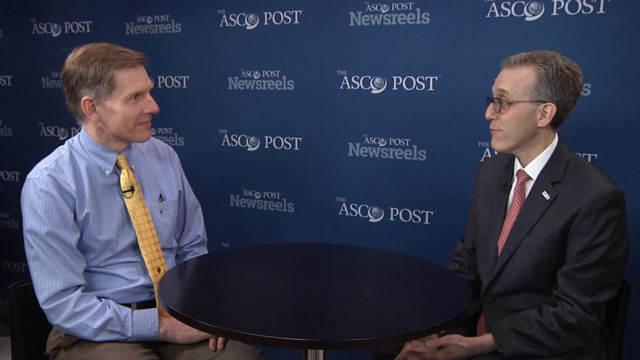
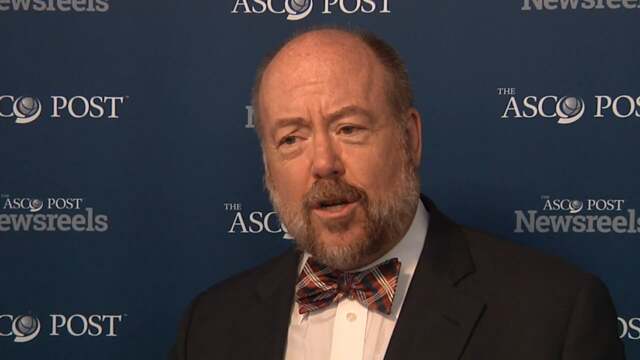
David E. Gerber, MD, and James L. Mulshine, MD, on Bringing Genomic Discovery and Targeted Therapies to Early-Stage Lung Cancer
2015 ASCO Annual Meeting
James L. Mulshine, MD, of Rush University Medical Center, and David E. Gerber, MD, of The University of Texas Southwestern Medical Center, discuss the ALCHEMIST trial, an NCI initiative to address the role of molecular testing and targeted therapies for earlier-stage lung disease (Abstract TPS7583).
Related Videos
Jedd Wolchok, MD, PhD, and Anthony J. Olszanski, RPh, MD
Anthony J. Olszanski, RPh, MD, of Fox Chase Cancer Center, and Jedd Wolchok, MD, PhD, of Memorial Sloan Kettering Cancer Center, discuss therapies for treatment-naive patients with advanced melanoma (Abstract LBA1).
Charles L. Bennett, MD, PhD, MPP and James O. Armitage, MD
Charles L. Bennett, MD, PhD, MPP of the University of South Carolina College of Pharmacy, and James O. Armitage, MD, of the University of Nebraska Medical Center, discuss the emerging and future benefits of biosimilars.
Andrew D. Seidman, MD, and Clifford A. Hudis, MD
Clifford A. Hudis, MD, and Andrew D. Seidman, MD, of Memorial Sloan Kettering Cancer Center, discuss the use of the decision support system Watson for Oncology and results of the iCanCare study on second opinions (Abstracts 566 and 6508).
Ruben A. Mesa, MD
Ruben A. Mesa, MD, of the Mayo Clinic, discusses pacritinib and its significant efficacy in myelofibrosis (Abstract LBA7006).
Charles F. von Gunten, MD, PhD
Charles F. von Gunten, MD, PhD, of OhioHealth Kobacker House discusses the ROMANA 1 and 2 trials on cachexia in NSCLC and a study on olanzapine vs fosaprepitant for the prevention of nausea and vomiting (Abstracts 9500 and 9502).