Nikhil Khushalani, MD, on Immunotherapy in Advanced Unresectable CSCC
Thematic Newsreels
Nikhil Khushalani, MD, Vice Chair for the Department of Cutaneous Oncology at Moffitt Cancer Center, offers his thoughts on the role of immunotherapy in the treatment of advanced cutaneous squamous cell carcinoma (CSCC). Dr. Khushalani discusses the three currently approved immunotherapeutic agents for this disease—cemiplimab-rwlc, pembrolizumab, and cosibelimab-ipdl—and their confirmatory trials as well as adverse event profiles. He also talks about choosing optimal treatment strategies for patients, and studies currently exploring monotherapy vs combination therapy regimens.
References
1. Migden MR, Rischin D, Schmults CD, et al: PD-1 blockade with cemiplimab in advanced cutaneous squamous-cell carcinoma. N Eng J Med 379:341-351, 2018.
2. Hughes BGM, Guminski A, Bowyer S, et al: A phase 2 open-label study of cemiplimab in patients with advanced cutaneous squamous cell carcinoma (EMPOWER-CSCC-1): Final long-term analysis of groups 1, 2, and 3, and primary analysis of fixed-dose treatment group 6. J Am Acad Dermatol 1:68-77, 2025.
3. Grob JJ, Gonzalez R, Bassett-Seguin N, et al: Pembrolizumab monotherapy for recurrent or metastatic cutaneous squamous cell carcinoma: A single-arm phase II trial (KEYNOTE-629). J Clin Oncol 25:2916-2925, 2020.
4. Maubec E, Boubaya M, Petrow P, et al: Phase II study of pembrolizumab as first-line, single-drug therapy for patients with unresectable cutaneous squamous cell carcinomas. J Clin Oncol 26:3051-3061, 2020.
5. Clingan P, Ladwa R, Brungs D, et al: Efficacy and safety of cosibelimab, an anti-PD-L1 antibody, in metastatic cutaneous squamous cell carcinoma. J Immunother Cancer 10:e007637, 2023.
6. Zandberg DP, Allred JB, Rosenberg AJ, et al: Phase II (Alliance A091802) randomized trial of avelumab plus cetuximab versus avelumab alone in advanced cutaneous squamous cell carcinoma. J Clin Oncol 43:2398-2408, 2025.
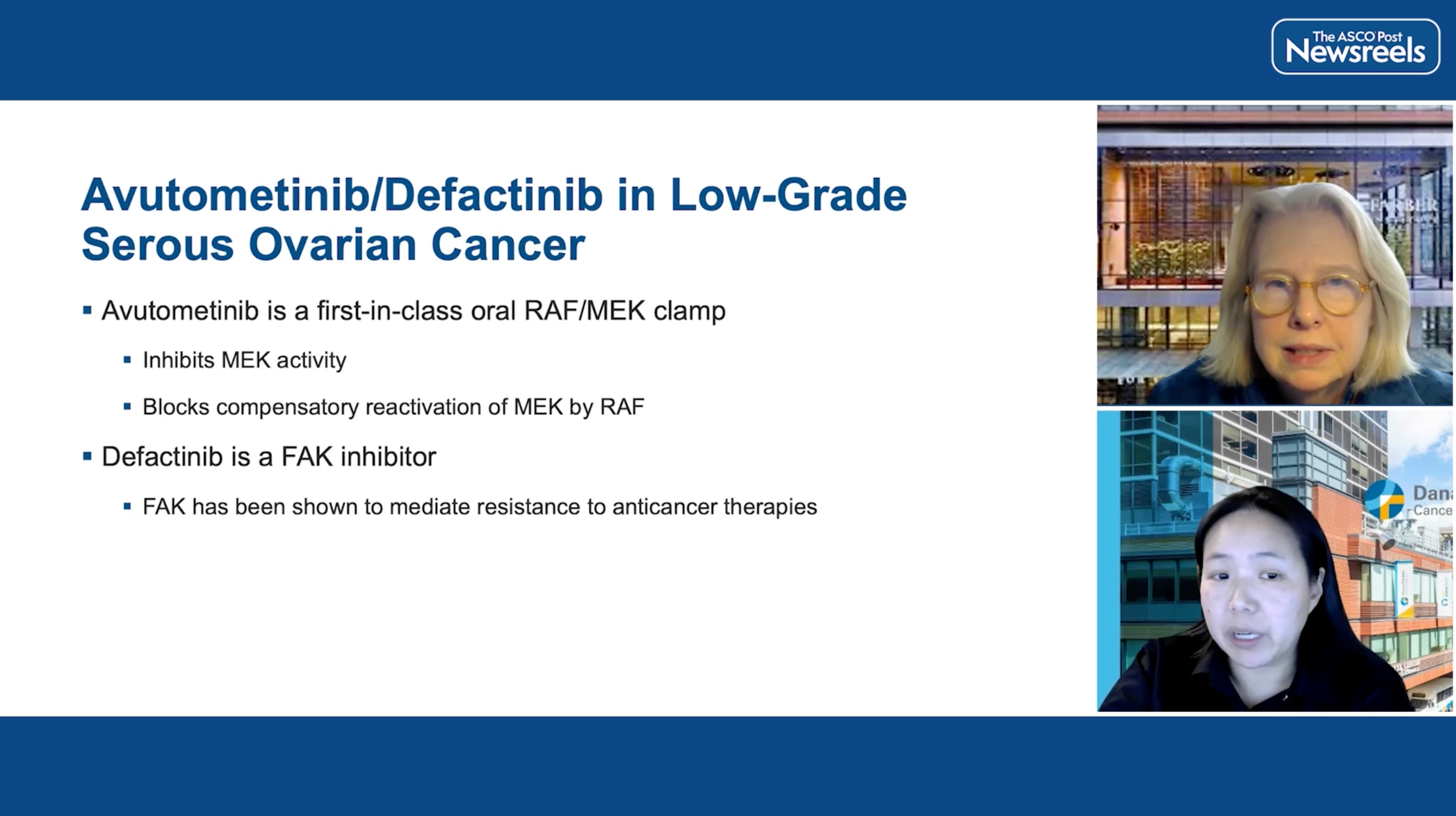
In this second installment of a two-part discussion about ovarian cancer advances for The ASCO Post Newsreels, Ursula A. Matulonis, MD, and Joyce F. Liu, MD, MPH, discuss low-grade serous ovarian carcinoma and an important recently published study. View part 1 of the program to hear them discuss antibody-drug conjugates and clinical trials including PRIMA and ATHENA.
Filmed November 22, 2024
Allison Betof Warner, MD, PhD, reviews important clinical research in the treatment of advanced melanoma, including tumor-infiltrating lymphocyte (TIL) therapy, the role of this innovative treatment in advanced melanoma, and relevant data, peer-reviewed literature, and FDA approvals in 2024. She also provides a look ahead at what is on the horizon in 2025 with regard to care for patients with advanced melanoma.
The ASCO Post Staff
Arvind N. Dasari, MD, PhD, of The University of Texas MD Anderson Cancer Center, discusses data presented at the ESMO Gastrointestinal Cancers Congress 2025, which showed that adding circulating tumor DNA (ctDNA) testing to current standard of care surveillance for patients with colorectal cancer (CRC) better identified patients who are appropriate candidates for metastasis-directed therapy.
Reference
- Dasari NA, Nakamura Y, Sorscher S, et al: Clinical utility of including circulating tumor DNA monitoring in standard of care colorectal cancer surveillance. ESMO Gastrointestinal Cancers Congress 2025. Abstract 2O.
The ASCO Post Staff
Raajit K. Rampal, MD, PhD, Director of the Center for Hematologic Malignancies and the Myeloproliferative Neoplasms Program at Memorial Sloan Kettering Cancer Center, discusses management strategies for these two conditions often associated with myelofibrosis. He discusses the role of Janus kinase inhibitors; using older therapies in novel ways; how stem cell transplantation is considered; and more.
References
- Marrone M, Morere L, Oladapo A, et al: Hematologic improvement experienced by pacritinib-treated patients with myelofibrosis in real-world clinical settings. Blood 144 (suppl 1):3814, 2024.
- Rampal RK, Verstovsek S, Devlin SM, et al: Safety and efficacy of combined ruxolitinib and thalidomide in patients with myelofibrosis: A phase II study. Blood 134 (suppl 1):4163, 2019.
The ASCO Post Staff
Nikhil Khushalani, MD, Vice Chair for the Department of Cutaneous Oncology at Moffitt Cancer Center, reviews advances in the adjuvant and neoadjuvant treatment of cutaneous squamous cell carcinoma (CSCC). He discusses the possibility of de-escalating therapy for patients who respond positively to presurgical agents; how to best select postoperative regimens; and ongoing trials in both spaces.
References
- Gross ND, Miller DM, Khushalani NI, et al: Neoadjuvant cemiplimab for stage II to IV cutaneous squamous-cell carcinoma. N Eng J Med 387:1557-1568, 2022.
- Gross ND, Miller DM, Khushalani NI, et al: Neoadjuvant cemiplimab and surgery for stage II-IV cutaneous squamous-cell carcinoma: Follow-up and survival outcomes of a single-arm, multicentre, phase 2 study. Lancet Oncol 11:1196-1205, 2023.
- Breukers SE, Traets JJH, van Dijk SW, et al: Neoadjuvant ipilimumab and nivolumab in resectable cutaneous squamous cell carcinoma: A randomized phase 2 trial. Nature Medicine. October 8, 2025 (early release online).
- Ladwa R, Lee JH, McGrath M, et al: Response-adapted surgical and radiotherapy de-escalation in resectable cutaneous squamous cell cancer using pembrolizumab: The De-Squamate study. J Clin Oncol 26:2888-2986, 2025.
- Porceddu SV, Bressel M, Poulsen MG, et al: Postoperative concurrent chemoradiotherapy versus postoperative radiotherapy in high-risk cutaneous squamous cell carcinoma of the head and neck: The randomized phase III TROG 05.01 trial. J Clin Oncol 13:1275-1283, 2018.
- Rischin D, Porceddu S, Day F, et al: Adjuvant cemiplimab or placebo in high-risk cutaneous squamous-cell carcinoma. N Eng J Med 393:774-785, 2025.
- Koyfman SA, Lee JHJ, Mortier L, et al: Phase 3 randomized trial (KEYNOTE-630) of adjuvant pembrolizumab versus placebo for high-risk locally advanced cutaneous squamous cell carcinoma following surgery and radiation. 2025 ASCO Annual Meeting. Abstract 6000. Presented May 31, 2025.