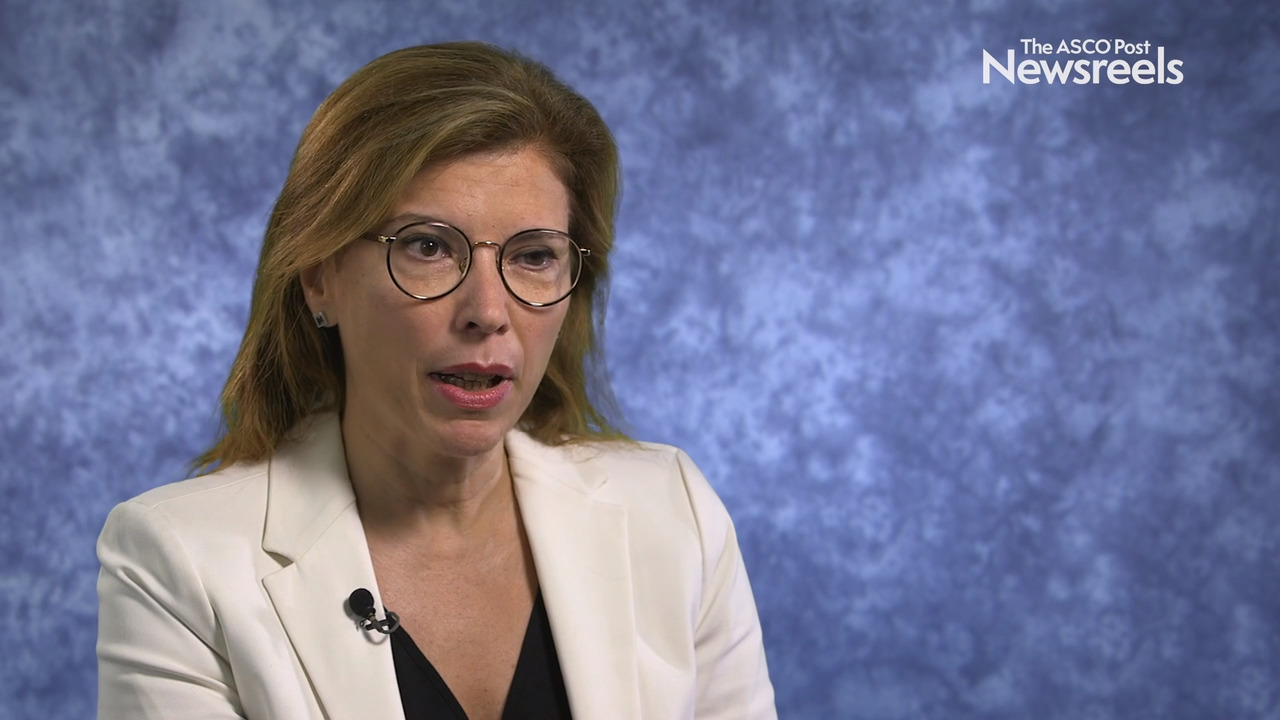
Robin L. Jones, MD, MBBS, on Advanced Angiosarcoma: TAPPAS Trial of a Novel Monoclonal Antibody Plus Pazopanib
ESMO 2019 Congress
Robin L. Jones, MD, MBBS, of The Royal Marsden/Institute of Cancer Research, discusses the first phase III study in angiosarcoma, which showed no difference in outcome between pazopanib vs pazopanib plus the novel monoclonal antibody TRC105 (Abstract 1667O).
Maha H.A. Hussain, MD, of Northwestern University Robert H. Lurie Comprehensive Cancer Center, discusses the phase III PROfound trial results on the efficacy of olaparib in men with metastatic castration-resistant prostate cancer whose tumors harbor alterations in DNA damage response genes and who had disease progression on prior hormone therapy (Abstract LBA12).
Angela Lamarca, MD, PhD, of the Christie NHS Foundation Trust, discusses findings from a study that showed new staging criteria should be considered for patients diagnosed with liver metastases in the absence of other extrahepatic tumor spread (Abstract 731P).
Thomas Powles, MD, PhD, of Queen Mary University of London, discusses the first study to examine immunotherapy and targeted treatment combinations with a personalized approach in bladder cancer. FGF, TORC1/2, and PARP inhibitors were explored in combination with durvalumab in selected patients (Abstract 902O).
Antonio González Martín, MD, PhD, of the Clínica Universidad de Navarra, discusses study findings showing niraparib therapy significantly improved progression-free survival in patients with advanced ovarian cancer across biomarker subgroups (Abstract LBA1).
Ana Maria Arance Fernandez, MD, PhD, of the Hospital Clínic de Barcelona, discusses the negative results of the phase III IMspire170 trial, which evaluated cobimetinib/atezolizumab vs pembrolizumab monotherapy in patients with BRAF V600 wild-type melanoma (Abstract LBA69).