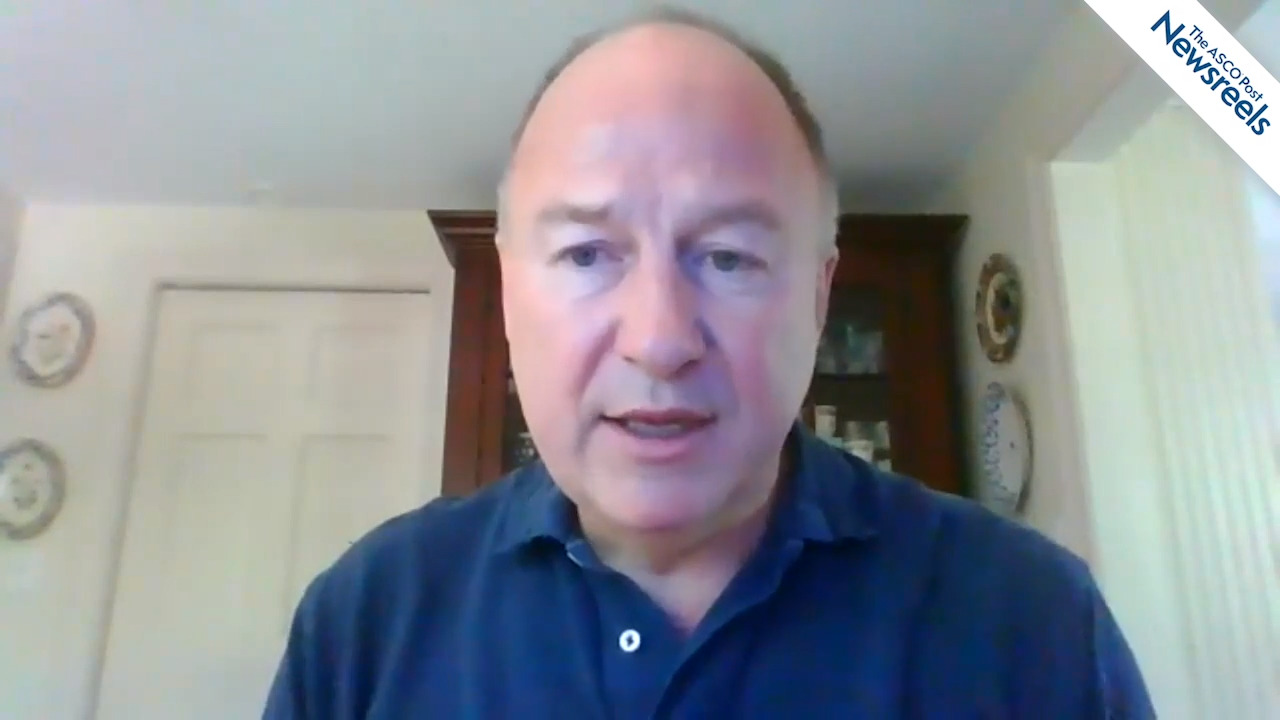
Rafal Dziadziuszko, MD, PhD, on Using Telemedicine During the Pandemic: Experience in Poland
COVID-19 and Cancer Care
Rafal Dziadziuszko, MD, PhD, of the Medical University of Gdansk, talks about the adjustments to cancer care that he and his colleagues have made, how and when they employ telemedicine, and whether the technology could change the future for clinical practice. Filmed April 24, 2020.
The ASCO Post Staff
Rafal Dziadziuszko, MD, PhD, of the Medical University of Gdansk, discusses the concerns his patients with cancer have about exposure to COVID-19 when they come to his institution for care and how he manages their fears. Filmed April 24, 2020.
The ASCO Post Staff
How have the activities of the Center for International Blood and Marrow Transplant Research been affected by the COVID-19 pandemic?
Recorded April 21, 2020.
The ASCO Post Staff
As a result of COVID-19, has your decision model for front-line therapy changed for patients with multiple myeloma who are either transplant-eligible or ineligible?
Recorded April 24, 2020.
The ASCO Post Staff
Irene M. Ghobrial, MD, of Dana-Farber Cancer Institute, talks about PROMISE—her screening study for people at high-risk of developing precursor conditions of multiple myeloma—and how this and other trials have been altered in the wake of the pandemic, as well as what might be considered a silver lining to the crisis. Filmed March 30, 2020.
The ASCO Post Staff
Paul G. Richardson, MD, of Dana-Farber Cancer Institute, discusses challenges patients with multiple myeloma have faced as a result of the COVID-19 pandemic and the research he and his international colleagues are conducting to better understand these difficulties and improve patient care.