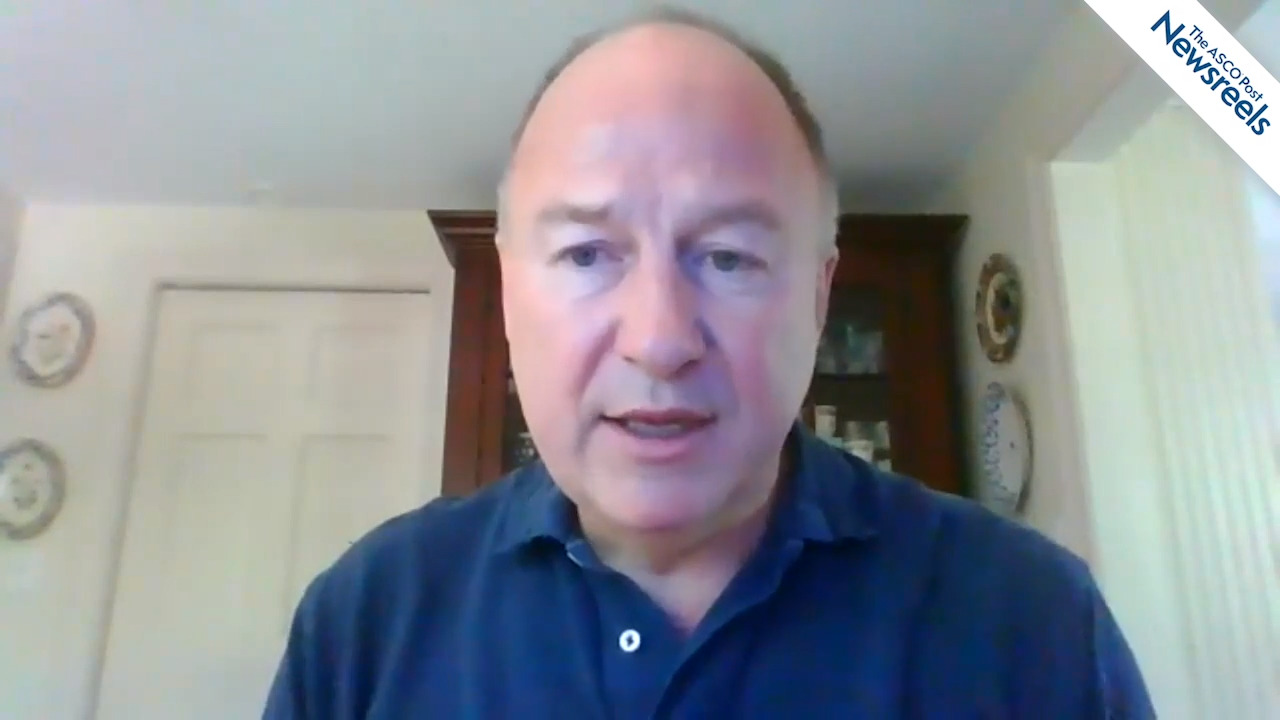
Nancy E. Davidson, MD, on COVID-19 and Cancer Care: Thoughts From the Seattle Epicenter
COVID-19 and Cancer Care
Nancy E. Davidson, MD, of the Seattle Cancer Care Alliance, and a member of The ASCO Post Editorial Board, talks about her experiences in one of the communities hardest hit by coronavirus and offers some practical advice on making changes in treatment and research. Recorded April 7, 2020.
The ASCO Post Staff
Giorgio V. Scagliotti, MD, PhD, of the University of Turin, talks about the progression of COVID-19 through his community and how, in nursing homes, lack of experience dealing with a pandemic is fueling a third wave of the virus in Italy. Filmed April 15, 2020.
The ASCO Post Staff
For community oncologists treating patients with multiple myeloma during the COVID-19 pandemic, what resources and clinical pearls would you suggest?
Recorded April 24, 2020.
The ASCO Post Staff
Are you proceeding with front-line autologous transplant in patients with mantle cell lymphoma or delaying it during the COVID-19 pandemic?
Recorded April 21, 2020.
The ASCO Post Staff
William Dale, MD, PhD, of City of Hope National Medical Center, discusses vulnerable populations—older adults and those with psychosocial or mental health concerns—and reviews best practices for treatment decisions, social distancing, and maintaining emotional health. Recorded April 15, 2020.
The ASCO Post Staff
Paul G. Richardson, MD, of Dana-Farber Cancer Institute, discusses challenges patients with multiple myeloma have faced as a result of the COVID-19 pandemic and the research he and his international colleagues are conducting to better understand these difficulties and improve patient care.