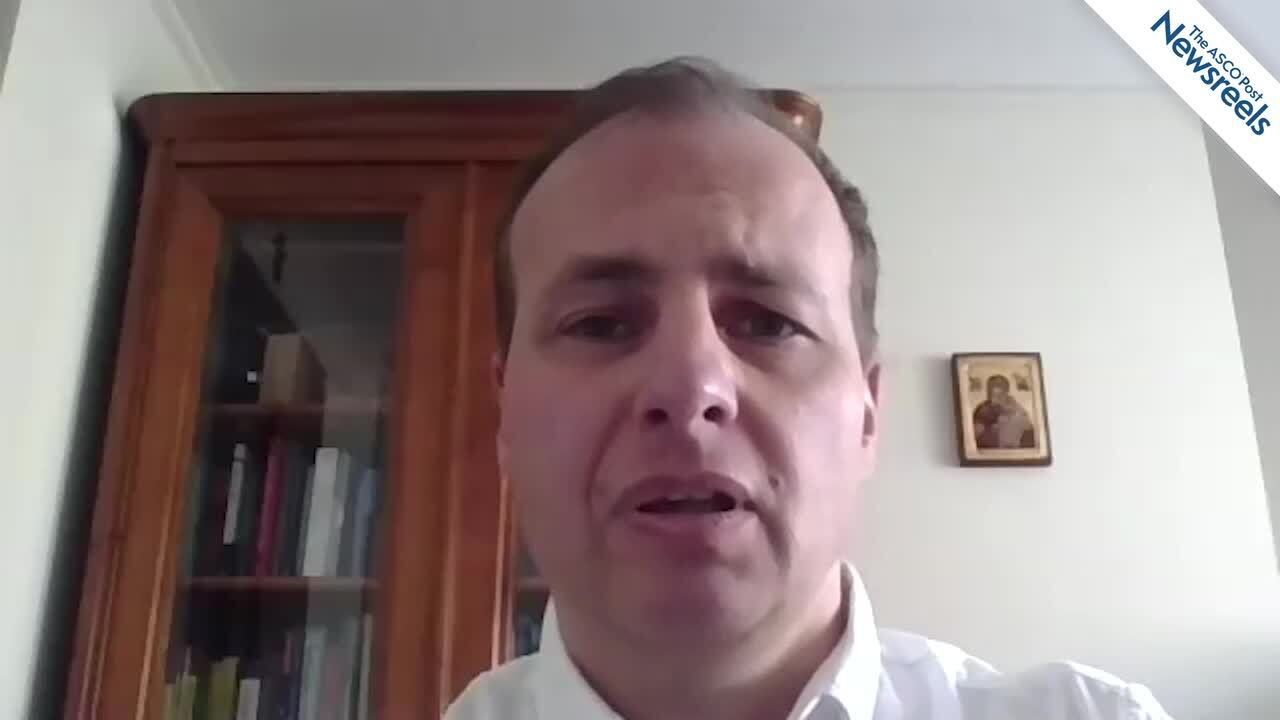
Giuseppe Curigliano, MD, PhD, on How COVID-19 Is Affecting Cancer Care: The View From Italy
COVID-19 and Cancer Care
Giuseppe Curigliano, MD, PhD, of the University of Milan, talks about how, in the face of the coronavirus pandemic, he and his fellow oncologists have altered the way they treat patients with cancer. Filmed March 24, 2020.
The ASCO Post Staff
How has the COVID-19 pandemic changed your approach to the selection of tyrosine kinase inhibitors for the treatment of patients with chronic myeloid leukemia?
Recorded April 24, 2020.
The ASCO Post Staff
How have the activities of the Center for International Blood and Marrow Transplant Research been affected by the COVID-19 pandemic?
Recorded April 21, 2020.
The ASCO Post Staff
During the COVID-19 pandemic, when and why would you consider delaying autologous transplant for patients with diffuse large B-cell lymphoma in second complete remission?
Recorded April 21, 2020.
The ASCO Post Staff
Because of the COVID-19 pandemic, has your management strategy changed for post-transplant consolidation and maintenance therapy in patients with multiple myeloma?
Recorded April 24, 2020.
The ASCO Post Staff
Rafal Dziadziuszko, MD, PhD, of the Medical University of Gdansk, discusses the concerns his patients with cancer have about exposure to COVID-19 when they come to his institution for care and how he manages their fears. Filmed April 24, 2020.