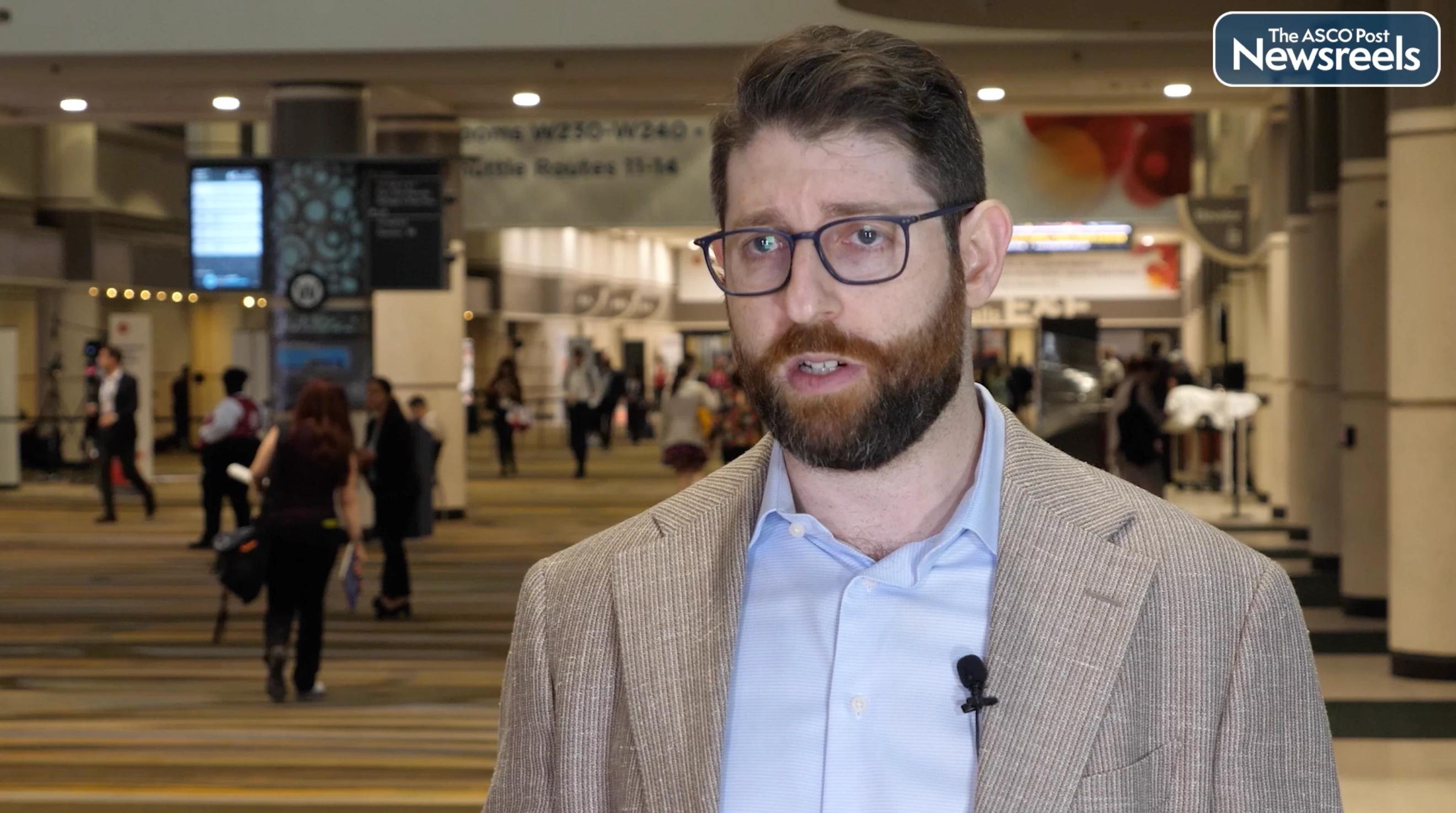
Mikkael Sekeres, MD, MS, on MDS and Exposure to Agent Orange
ASH 2025
Mikkael Sekeres, MD, MS, Chief, Division of Hematology and Professor of Medicine at Sylvester Comprehensive Cancer Center, part of the University of Miami Miller School of Medicine, presents findings from a new study that connects exposure to the herbicide Agent Orange to earlier and more severe cases of myelodysplastic syndromes (MDS). Researchers concluded that exposure is associated with younger age at MDS diagnosis, ultimate MDS diagnosis, genetic complexity of MDS, increased risk of disease progression, and with Black race (Abstract 5626).
The ASCO Post Staff
Krina Patel, MD, MSc, of The University of Texas MD Anderson Cancer Center, provides updated results from the fully enrolled, ongoing iMMagine-1 phase II registrational trial of anitocabtagene autoleucel, an autologous anti-BCMA CAR T-cell therapy with a novel D-domain binder. The agent is under development for patients with relapsed and/or refractory multiple myeloma (Abstract 256).
The ASCO Post Staff
Aaron Logan, MD, PhD, of UCSF Health, discusses research examining the effect of transplant before or after treatment with brexucabtagene autoleucel in the real world for adult patients with relapsed or refractory Philadelphia chromosome–negative B-cell acute lymphoblastic leukemia (ALL) (Abstract 516).
The ASCO Post Staff
Guillermo Garcia-Manero, MD, of The University of Texas MD Anderson Cancer Center, reviews data from three abstracts in myelodysplastic syndromes (MDS) presented at this year’s meeting: outcomes from the phase III VERONA trial of venetoclax with azacitidine vs placebo with azacitidine in patients with treatment-naive intermediate- and higher-risk MDS (Abstract 235); safety and efficacy results from a phase Ib trial of a dual IRAK1/4 inhibitor in patients with relapsed/refractory lower-risk MDS (Abstract 489); and results from the phase II ASTX030-01 trial, showing pharmacokinetic, efficacy, and safety data of oral ASTX030 in patients with MDS (Abstract 491).
The ASCO Post Staff
Alexander Lesokhin, MD, of Memorial Sloan Kettering Cancer Center, discusses results of a retrospective analysis from the phase II MagnetisMM-3 trial. A post hoc analysis was conducted of the subgroup of patients enrolled in the study who had a prolonged treatment interruption or who permanently discontinued elranatamab and maintained their responses for 6 months or longer (Abstract 2269).
The ASCO Post Staff
Benjamin Diamond, MD, of the University of Miami, describes findings from the single-center phase II REKINDLE trial, which looked at the combination regimen of iberdomide, carfilzomib, daratumumab, and dexamethasone in patients with early relapsed/refractory multiple myeloma (Abstract 251).