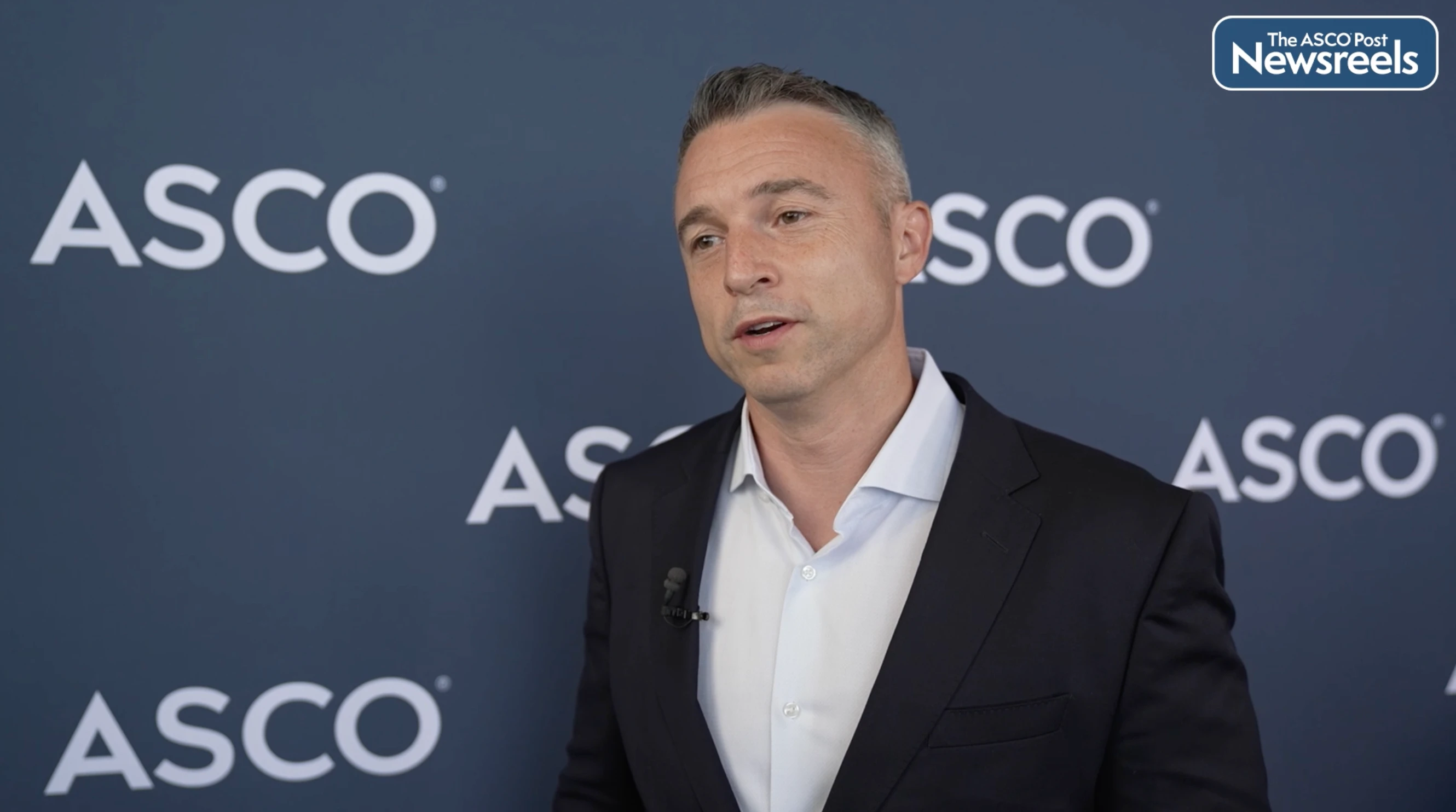
Dai Chihara, MD, on a Regimen for Older, Unfit, or Frail Patients With Newly Diagnosed DLBCL
ASCO 2026
Dai Chihara, MD, of The University of Texas MD Anderson Cancer Center, reviews results from an open-label, single-arm, phase II trial that investigated the combination of epcoritamab with R-miniCVP (rituximab, cyclophosphamide, vincristine, prednisone) in patients with newly diagnosed diffuse large B-cell lymphoma (DLBCL) classified as unfit or frail per geriatric assessment or not eligible for anthracycline chemotherapy due to reduced ejection function or prior exposure (Abstract 7002).
The ASCO Post Staff
Elena Elimova, MD, Princess Margaret Cancer Centre, discusses the efficacy in PD-L1 subgroups of zanidatamab plus chemotherapy with or without tislelizumab as a first-line regimen for HER2-positive locally advanced or metastatic gastroesophageal adenocarcinoma (Abstract 4010).
The ASCO Post Staff
Marlana M. Orloff, MD, of Thomas Jefferson University Hospital, reviews primary results from the OptimUM-02 trial, which investigated the doublet of darovasertib plus crizotinib vs investgator’s choice for first-line therapy among patients with HLA-A2–negative metastatic uveal melanoma (Abstract LBA9503).
Mohammed Al-Jumayli, MD, of H. Lee Moffitt Cancer Center and Research Institute, discusses the effects of the use of a multimodal, digitally supported prehabilitation program among adults aged 65 years and older undergoing surgery for hepatobiliary cancer; the model was associated with favorable short-term functional performance signals and high levels of engagement (Abstract 12039).
The ASCO Post Staff
Adam Kibel, MD, of Brigham and Women's Hospital, discusses findings from the phase III PROTEUS trial, which evaluated perioperative (neoadjuvant and adjuvant) apalutamide and androgen deprivation therapy vs placebo and ADT with radical prostatectomy in patients with high-risk localized or locally advanced prostate cancer. Dr. Kibel talks about how the regimen of apalutamide and ADT affects both the surgical procedure itself as well as patient outcomes postprocedure (Abstract LBA1).
The ASCO Post Staff
Samuel J. Klempner, MD, FASCO, of Mass General Brigham Cancer Institute, discusses a single-arm phase II study—which is currently open and enrolling (ClinicalTrials.gov identifier NCT07070466)—evaluating ivonescimab in combination with FOLFOX as front-line therapy in locally advanced, unresectable, or metastatic HER2-negative gastroesophageal adenocarcinoma (Abstract TPS4246).