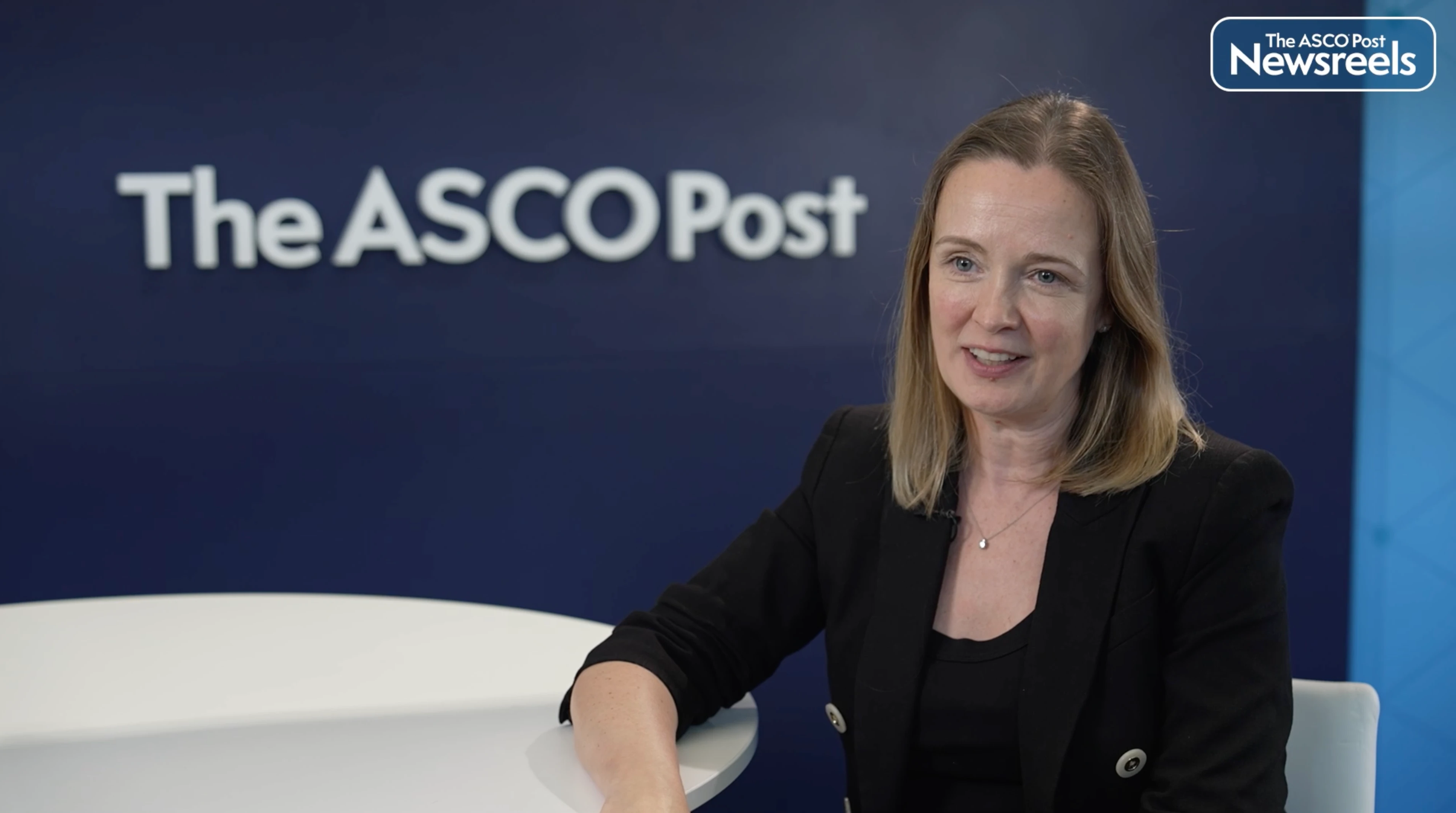
Julie R. Gralow, MD, FACP, FASCO, on Highlights of the 2026 ASCO Annual Meeting
ASCO 2026
Julie R. Gralow, MD, FACP, FASCO, Chief Medical Officer and Executive Vice President of ASCO, provides an overview of the highlights of this year’s meeting, including practice-changing data included in the Plenary Session.
Lorenza Rimassa, MD, of IRCCS Humanitas Research Hospital, and David James Pinato, MD, PhD, of Imperial College London, discuss positive phase III findings in intermediate-stage hepatocellular carcinoma (HCC) with immunotherapy-based combinations with TACE, second-line data from IMbrave251, and novel targeted and bispecific antibody therapies.
The ASCO Post Staff
Shailender Bhatia, MD, of the University of Washington and Fred Hutchinson Cancer Center, presents data from the phase III ADAM trial, a multicenter, randomized, double-blinded, placebo-controlled study of the anti–PD-L1 antibody avelumab in patients with Merkel cell carcinoma and lymph node metastases (Abstract LBA9504).
The ASCO Post Staff
Jessica J. Lin, MD, Mass General Brigham Cancer Institute, presents data from the ALKOVE-1 study, which is looking at the investigational ALK tyrosine kinase inhibitor (TKI) neladalkib among patients with ALK-positive non–small cell lung cancer (NSCLC); Dr. Lin discusses the first analyses of phase II TKI-pretreated patients and preliminary data in TKI-naive patients (Abstract 8503).
The ASCO Post Staff
Evan T. Hall, MD, of Fred Hutchinson Cancer Center, discusses findings from the randomized phase II MATRiX trial, which evaluated the efficacy of the ATR inhibitor tuvusertib with or without avelumab in patients with anti–PD-(L)1–refractory Merkel cell carcinoma (Abstract LBA9514).
The ASCO Post Staff
Elena Elimova, MD, Princess Margaret Cancer Centre, discusses the efficacy in PD-L1 subgroups of zanidatamab plus chemotherapy with or without tislelizumab as a first-line regimen for HER2-positive locally advanced or metastatic gastroesophageal adenocarcinoma (Abstract 4010).