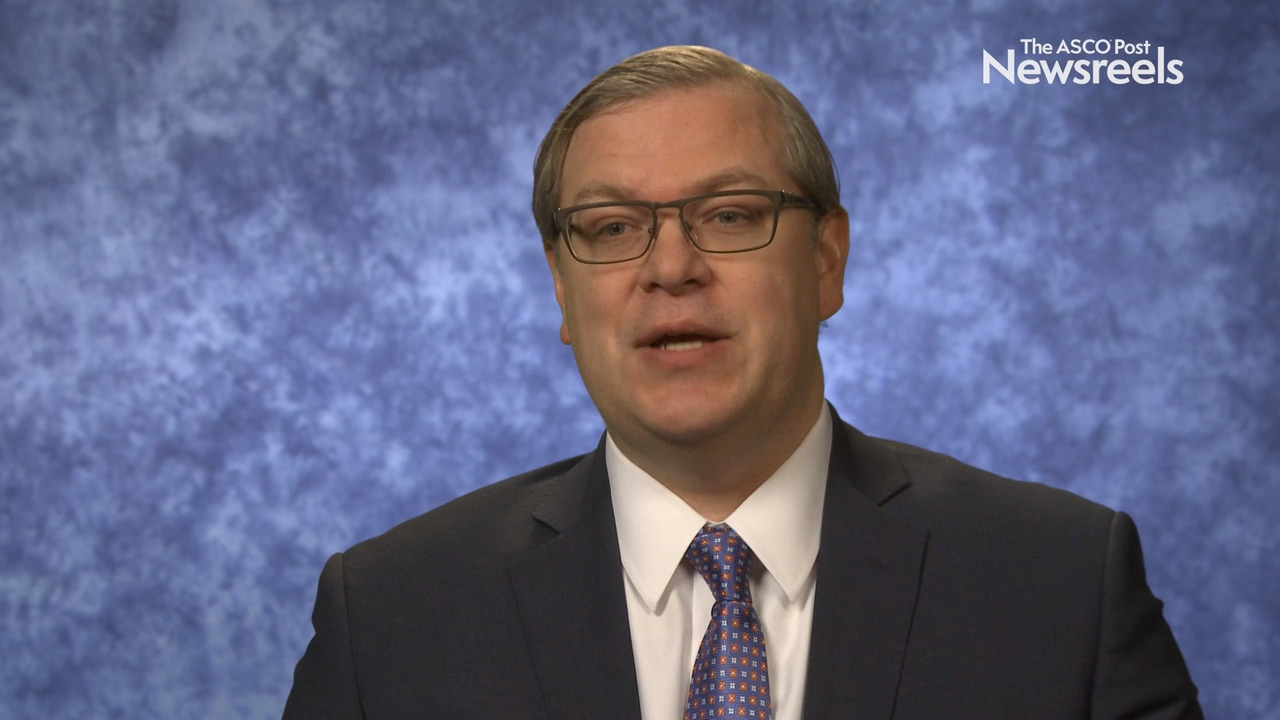
Brian I. Rini, MD, on Renal Cell Cancer: Risk Stratification After Resection of Localized Disease
2019 Genitourinary Cancers Symposium
Brian I. Rini, MD, of the Cleveland Clinic Taussig Cancer Institute, discusses current models used to estimate the risk of recurrence as well as genomic data that could help pinpoint individual tumor biology.
Brian C. Baumann, MD, of Washington University School of Medicine, discusses phase III study findings on adjuvant sequential chemotherapy plus radiotherapy vs adjuvant radiotherapy alone for locally advanced bladder cancer after radical cystectomy (Abstract 351).
Thomas Powles, MD, PhD, of Queen Mary University of London, discusses phase III study findings on ramucirumab plus docetaxel vs placebo plus docetaxel in patients with advanced platinum-refractory urothelial carcinoma (Abstract 353).
Stefanie C. Fischer, MD, of Manchester Cancer Research Centre and The Christie NHS Foundation Trust, discusses an international retrospective analysis of the rare clinical scenario of men relapsing after adjuvant treatment with bleomycin/etoposide/cisplatin for clinical stage I nonseminoma (Abstract 510).
Sumit K. Subudhi, MD, PhD, of The University of Texas MD Anderson Cancer Center, discusses the initial results from a phase II study of nivolumab plus ipilimumab in the treatment of metastatic castration-resistant prostate cancer (Abstract 142).
Jason A. Efstathiou, MD, DPhil, of Massachusetts General Hospital, discusses the debate over treating muscle-invasive bladder cancer with radical cystectomy vs trimodality therapy.