Andrew D. Seidman, MD, and Susan F. Dent, MD, on Breast Cancer: Analysis of the SANDPIPER Trial
2018 ASCO Annual Meeting
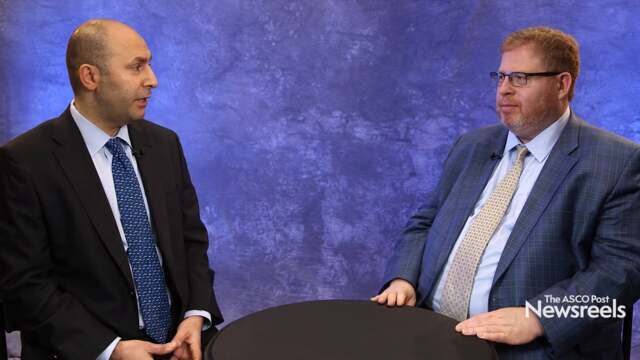
Andrew D. Seidman, MD, of Memorial Sloan Kettering Cancer Center, and Susan F. Dent, MD, of The Ottawa Hospital Cancer Centre, analyze the phase III study findings on taselisib plus fulvestrant vs fulvestrant in patients with estrogen receptor–positive, PIK3CA-mutant, locally advanced or metastatic breast cancer (Abstract LBA1006).
Toni K. Choueiri, MD, of Dana-Farber Cancer Institute, and Jonathan E. Rosenberg, MD, of Memorial Sloan Kettering Cancer Center, discuss their perspectives on the top abstracts in bladder cancer presented at the 2018 ASCO Annual Meeting (Abstracts 4507, 4506, 4503, 4504).
Gianni Bisogno, MD, of the University Hospital of Padova, discusses study findings on maintenance low-dose chemotherapy in patients with high-risk rhabdomyosarcoma (Abstract LBA2).
Sherry Shen, MD, of Columbia University Medical Center, discusses findings on the use of omega-3 fatty acid for obese breast cancer patients with aromatase inhibitor–related arthralgia (Abstract 10000).
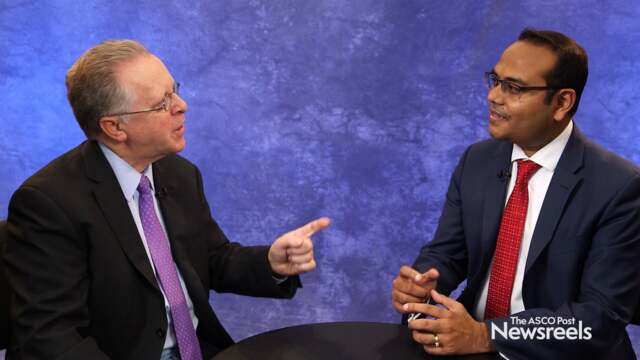
Andrew D. Seidman, MD, of Memorial Sloan Kettering Cancer Center, and Aditya Bardia, MD, MPH, of Massachusetts General Hospital, discuss the efficacy of sacituzumab govitecan for treatment-refractory hormone receptor–positive/HER2-negative metastatic breast cancer (Abstract 1004).
Raymond U. Osarogiagbon, MBBS, of Baptist Cancer Center, discusses a kit used in non–small cell lung cancer resection that improves staging quality and overall survival without adding to morbidity of curative surgery (Abstract 8502).