Trastuzumab Biosimilar Shows Efficacy and Safety Comparable to Reference Product in Phase III HERITAGE Trial
A new biosimilar version of the monoclonal antibody trastuzumab (Herceptin) is getting close to the finish line in the race to develop biosimilars in oncology. The new antibody, MYL-1401O, demonstrated comparable efficacy and safety compared with trastuzumab as front-line treatment of women with...
Joint Analysis Confirms Benefit of Anthracyclines for High-Risk Early-Stage Breast Cancer
For the treatment of high-risk, HER2-negative early-stage breast cancer, anthracyclines were confirmed as beneficial in a joint analysis of the Anthracyclines in Early Breast Cancer (ABC) trials. Presented at the 2016 ASCO Annual Meeting, the joint analysis of the ABC trials validated taxane plus...
SNMMI 2016: VASH Collimator Allows Three-Dimensional Imaging of the Breast With Less Radiation
Preliminary tests have demonstrated that a new device may enable existing breast cancer imagers to provide up to six times better contrast of tumors in the breast, while maintaining the same or better image quality and halving the radiation dose to patients. The advance is made possible by a new...
Mindfulness-Based Stress-Reduction Program May Reduce Psychological and Physical Symptoms in Breast Cancer Survivors
A mindfulness-based stress-reduction program for breast cancer survivors was associated with psychological and physical symptom benefits during and at 6 weeks after intervention, according to a randomized trial reported in the Journal of Clinical Oncology by Lengacher et al. Study Details In the...
PALOMA-3 Trial in HER2-Negative Metastatic Breast Cancer: Challenge of Moving Beyond Estrogen Receptor Positivity
Hormone receptor–positive breast cancer represents the largest therapeutic subgroup of the disease. The development of endocrine therapies has shaped the treatment paradigm for both advanced- and early-stage disease for decades.1 Still, despite their significant impact, advanced breast cancer...
Prolonged Progression-Free Survival With Addition of Palbociclib to Fulvestrant in HER2-Negative Metastatic Breast Cancer
As reported in The Lancet Oncology by Massimo Cristofanilli, MD, of the Robert H. Lurie Comprehensive Cancer Center, Northwestern University, and colleagues, the final results of the phase III PALOMA-3 trial showed that the addition of the CDK4/CDK6 inhibitor palbociclib (Ibrance) to fulvestrant...
Ovarian Suppression in Premenopausal Women With Estrogen Receptor–Positive Breast Cancer
Oophorectomy was the first proposed form of endocrine therapy for women with breast cancer. Over 100 years ago, Thomas Nunn reported a relationship between menopause and regression of breast cancer.1 This incited interest in the induction of menopause as an anticancer therapy, and in 1986, a...
ASCO Clinical Practice Guideline Update on Ovarian Suppression/Adjuvant Endocrine Therapy in Hormone Receptor–Positive Breast Cancer
As reported in the Journal of Clinical Oncology by Harold J. Burstein, MD, PhD, of Dana-Farber Cancer Institute, Boston, and colleagues, ASCO has released a clinical practice guideline update on ovarian suppression as part of the extant guideline on adjuvant endocrine therapy in hormone...

Lisa A. Carey, MD, and Nicholas C. Turner, MD, PhD, on PALOMA-2 and -3 Study Findings in Advanced Breast Cancer
Lisa A. Carey, MD, of the University of North Carolina, and Nicholas C. Turner, MD, PhD, of The Royal Marsden Hospital and Institute of Cancer Research, discuss the efficacy of palbociclib plus fulvestrant in patients with ESR1 mutations in circulating tumor DNA, and palbociclib and letrozole for postmenopausal women with ER+/HER2–advanced breast cancer (Abstracts 507, 524).
Rising Breast Cancer Incidence in Sub-Saharan Africa: Challenges and Opportunities
The incidence of new cases of breast cancer in low- and middle-income countries, particularly in sub-Saharan Africa, is rising, and it will take a concerted effort from the international cancer community to counteract this troubling upward trend. It has been estimated that of the 15 million cancer ...
Additional 5 Years of Letrozole May Benefit Some Postmenopausal Women With Early-Stage Breast Cancer
Five years of aromatase inhibitor as upfront therapy or after tamoxifen is the current standard of care for postmenopausal women with early hormone receptor–positive breast cancer. A new trial suggests that extending aromatase inhibitor therapy with letrozole for an additional 5 years may improve...
ASCO 2016: Significant Cost Differences Found Among Breast Cancer Chemotherapy Regimens
Costs associated with different breast cancer chemotherapy regimens can vary significantly, regardless of effectiveness, according to new research from The University of Texas MD Anderson Cancer Center. Understanding cost differences should help guide informed discussions between patients and...
Lisa A. Carey, MD, and Tuya Pal, MD, on BRCA Carriers: The Disparities in Management
Lisa A. Carey, MD, of the University of North Carolina, and Tuya Pal, MD, of H. Lee Moffitt Cancer Center & Research Institute, discuss the racial disparities in cancer risk management among BRCA carriers across a diverse sample of young black, Hispanic, and non-Hispanic white breast cancer survivors (Abstract LBA1504).
Lisa A. Carey, MD, and Julie Gralow, MD: Top Breast Cancer Papers Presented at the 2016 ASCO Annual Meeting
Lisa A. Carey, MD, of the University of North Carolina, and Julie Gralow, MD, of the University of Washington, discuss the most important data presented this year on treating breast malignancies (Abstracts LBA1, 500, and 507).
Exercise Associated With Reduced Risk of Cardiovascular Events in Women With Nonmetastatic Breast Cancer
Greater levels of leisure-time physical activity were associated with a reduced risk for cardiovascular disease events in women with nonmetastatic breast cancer, according to a study reported by Jones et al in the Journal of Clinical Oncology. Study Details The study involved 2,973 women (mean...
Prognostic Impact of Recurrence Score and Estrogen Receptor Expression in Breast Cancer After 5 Years of Tamoxifen
As reported in the Journal of Clinical Oncology by Wolmark et al, higher 21-gene recurrence score (RS) was strongly predictive of late disease recurrence among patients with high quantitative estrogen-receptor expression (ESR1) receiving tamoxifen for 5 years in two NRG Oncology/NSABP (National...
ASCO 2016: Minority BRCA-Positive Breast Cancer Survivors Appear Less Likely to Receive Preventive Surgery
For breast cancer survivors who carry mutations in BRCA genes, preventive surgery may substantially reduce the risk of future breast and ovarian cancers. However, it appears that black women are far less likely to receive these widely recommended procedures than white or Hispanic...
Paul E. Goss, MD, PhD, on Postmenopausal Early-Stage Breast Cancer: Extending Letrozole Treatment
Paul E. Goss, MD, PhD, of Massachusetts General Hospital Cancer Center and Harvard Medical School, discusses disease-free survival results from a study extending adjuvant letrozole for 5 years after completing an initial 5 years of aromatase inhibitor therapy alone or preceded by tamoxifen (Abstract LBA1).

Julie Lemieux, MD, on Letrozole in Postmenopausal Early-Stage Breast Cancer: Patient-Reported Outcomes
Julie Lemieux, MD, of Centre Hospitalier Universitaire de Québec, discusses patient-reported outcomes from a study extending adjuvant letrozole for 5 years after completing an initial 5 years of aromatase inhibitor therapy alone or preceded by tamoxifen (Abstract LBA506). To see the French language version of this discussion, click here.
Julie Lemieux, MD, on Letrozole in Postmenopausal Early-Stage Breast Cancer: Patient-Reported Outcomes (French Language)
Julie Lemieux, MD, of Centre Hospitalier Universitaire de Québec, discusses in French patient-reported outcomes from a study extending adjuvant letrozole for 5 years after completing an initial 5 years of aromatase inhibitor therapy alone or preceded by tamoxifen (Abstract LBA506). To see the English language version of this video, please click here.
ASCO 2016: 10 Years of Aromatase Inhibitor Therapy Reduces Breast Cancer Recurrence Without Compromising Quality of Life in Postmenopausal Patients
For updated findings on aromatase inhibitor therapy from the 2016 San Antonio Breast Cancer Symposium, please click here, here, or here. A randomized phase III clinical trial, MA.17R, found that postmenopausal women with early breast cancer benefit from extending aromatase inhibitor therapy with...
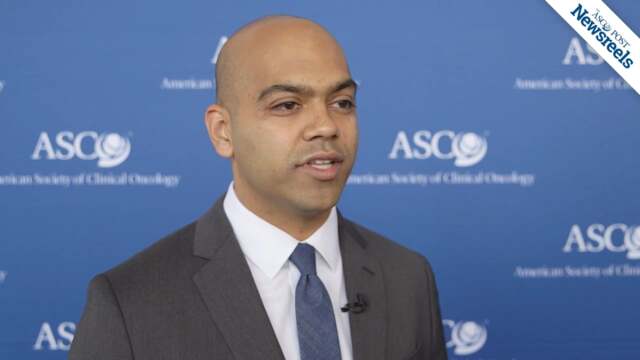
Nikhil Wagle, MD, on The Metastatic Breast Cancer Project: Progress Report
Nikhil Wagle, MD, of the Dana-Farber Cancer Institute, discusses the strides made in this national direct-to-patient initiative to accelerate genomics research (Abstract LBA1519).
ASCO 2016: Locoregional Surgery Followed by Standard Therapy Improves Survival vs Standard Therapy Alone in Stage IV Breast Cancer
Surgery to remove the primary tumor in women diagnosed with stage IV breast cancer followed by standard combination therapies improved survival over standard therapy alone, an international clinical trial revealed. The results of the phase III randomized, controlled trial were presented today...
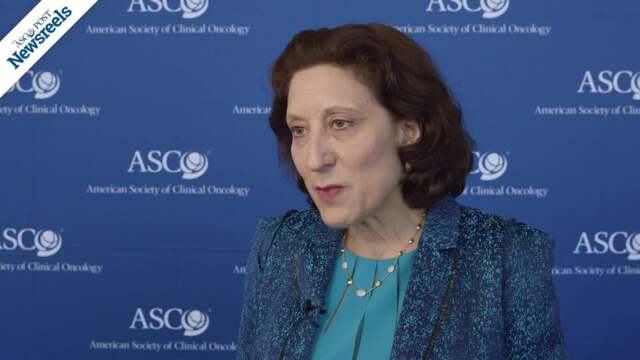
Hope S. Rugo, MD, on HER2+ Breast Cancer: Findings on a Trastuzumab Biosimilar
Hope S. Rugo, MD, of the University of California, San Francisco, discusses phase III study results on a new possible alternative to trastuzumab for HER2-positive metastatic breast cancer: the biosimilar known as Myl-1401O (Abstract LBA503).
ASCO 2016: Innovative Direct-to-Patient Outreach May Accelerate Breast Cancer Research
An innovative project launched in October 2015 may help expedite metastatic breast cancer genomics research and provide leads for development of new treatments. In the 7 months since the launch, more than 2,000 patients have enrolled in the research study designed to collect and...
ASCO 2016: Biosimilar Shows Comparable Efficacy and Safety to Trastuzumab in HER2-Positive Metastatic Breast Cancer
A biosimilar trastuzumab antibody (MYL-1401O) is comparable in efficacy and safety to trastuzumab (Herceptin) in women with HER2-positive advanced breast cancer, according to a randomized phase III study. The response rates were comparable among women who received trastuzumab and among...
Poorer Adherence to Endocrine Treatment Associated With Poorer Outcome in Postmenopausal Hormone Receptor–Positive Breast Cancer
In an analysis of the Breast International Group (BIG) 1-98 trial reported in the Journal of Clinical Oncology, Chirgwin et al found that poorer adherence to endocrine therapy was associated with poorer disease-free survival in postmenopausal women with hormone receptor–positive breast cancer ...
ASCO Guideline on Endocrine Therapy for Hormone Receptor–Positive Metastatic Breast Cancer
As reported by Hope S. Rugo, MD, of the University of California San Francisco Comprehensive Cancer Center, and colleagues in the Journal of Clinical Oncology, ASCO has released a clinical practice guideline on endocrine therapy for hormone receptor–positive metastatic breast cancer. The...
Breast Cancer Risk From Modifiable and Nonmodifiable Risk Factors Among White Women in the United States
A model developed to estimate the absolute risk of breast cancer suggests that a 30-year-old white woman in the United States has an 11.3% risk, on average, of developing invasive breast cancer by the age of 80, according to a new study published by Maas et al in JAMA Oncology. Breast cancer is a...
Early Lapatinib-Related Rash Associated With Improved Outcome in Breast Cancer
An analysis of the phase III adjuvant ALTTO trial showed that early rash was associated with better clinical outcome with lapatinib (Tykerb) treatment of HER2-positive breast cancer, as reported by Sonnenblick et al in the Journal of the National Cancer Institute. It had been previously found that...
ExteNET Trial of Neratinib: One Size Does Not Fit All in HER2-Positive Breast Cancer
Neratinib is an oral anti-HER2 tyrosine kinase inhibitor that has shown promising activity in the treatment of HER2-positive metastatic breast cancer.1 It differs from monoclonal antibodies such as trastuzumab (Herceptin) because, as a small molecule, neratinib blocks the ATP binding site on the...
Neratinib Improves Invasive Disease–Free Survival in HER2-Positive Breast Cancer
In the phase III ExteNET trial reported in The Lancet Oncology, Arlene Chan, MD, of the Breast Cancer Research Centre-Western Australia, Perth, and colleagues found that 1 year of treatment with the HER1, HER2, and HER4 tyrosine kinase inhibitor neratinib improved invasive disease–free survival...
Racial Disparities in Early Supportive Medication Use and End-of-Life Care Among Medicare Patients With Stage IV Breast Cancer
In a study reported in the Journal of Clinical Oncology, Check et al identified disparities in supportive medication use and end-of-life care between black and white Medicare patients with stage IV breast cancer. Study Details The study involved SEER (Surveillance, Epidemiology, and End...
Is Male Breast Cancer Overlooked in Clinical Trials?
Three and a half years ago, Oliver Bogler, PhD, a cancer biologist and Senior Vice President of Academic Affairs at the University of Texas MD Anderson Cancer Center, saw his personal and professional worlds collide. He received a cancer diagnosis—one that mirrored his wife’s. “Some might say that ...
Dr. Susan Love: Time to Address ‘Collateral Damage’ of Breast Cancer Treatment
The “collateral damage” of cancer treatment is a topic that is familiar to Susan Love, MD, MBA. As a breast cancer surgeon and chief visionary officer of Dr. Susan Love Research Foundation, she has learned much about the consequences of cancer treatment. But she came by an important aspect of her...
Young Women Require Formal Assessment to Identify Breast Cancer Risk
Half of the young women presenting to an academic surgical breast practice would qualify for mammography screening starting at age 40. According to the newly updated guidelines, these young at-risk women may be missed, researchers reported at the 2016 American Society of Breast Surgeons (ASBS)...
Highlights From the 2016 AACR Annual Meeting
This year’s Annual Meeting of the American Association for Cancer Research (AACR) featured outstanding research in the field of cancer, as well as an inspiring talk by Vice President Joe Biden (see the May 10 issue of The ASCO Post). Here are some summaries of studies that warrant attention; they...
Breast Cancer Research Foundation: Revitalizing Academic Research in Breast Cancer Through Drug Research Collaborative
When Evelyn H. Lauder was diagnosed with breast cancer in 1989, she became a vocal spokesperson for women’s health, and in 1993, along with Larry Norton, MD, now Deputy Physician-in-Chief for Breast Cancer Programs and Medical Director of the Evelyn H. Lauder Breast Center at Memorial Sloan...
NCCN Clinical Practice Guidelines in Oncology (NCCN Guidelines®): 2016 Guidelines
In 1996, the National Comprehensive Cancer Network (NCCN®) published its first set of Clinical Practice Guidelines in Oncology® (NCCN Guidelines®), covering eight tumor types. The NCCN Guidelines® are now published for more than 60 tumor types and topics. Some of the key updates for 2016 were...
Meta-analysis of Breast Cancer Studies Demonstrates Value of Pathologic Complete Response
In a meta-analysis of neoadjuvant studies totaling over 18,000 patients, achievement of pathologic complete response was associated with significantly reduced disease recurrence and mortality across the various breast cancer subtypes. Laura Spring, MD, a senior medical oncology fellow at...
Long-Term Survival Benefit With Adjuvant Tamoxifen in Premenopausal Women With Estrogen Receptor–Positive Breast Cancer
As reported by Ekholm et al in the Journal of Clinical Oncology, 25-year follow-up of a Swedish phase III trial suggests a survival benefit with 2 years of adjuvant tamoxifen vs no systemic treatment in premenopausal women with estrogen receptor–positive stage II primary breast cancer. Study ...
Study Finds No Benefit of Adding Pictilisib to Fulvestrant in Aromatase Inhibitor–Resistant Breast Cancer
Adding the PI3K inhibitor pictilisib to fulvestrant (Faslodex) did not improve progression-free survival in women with estrogen receptor–positive, HER2-negative, aromatase inhibitor–resistant advanced breast cancer, according to the phase II FERGI trial reported in The Lancet Oncology...
Physician Recommendation May Influence Racial Disparity in BRCA1/2 Testing in Women With Breast Cancer
A disparity in BRCA1/2 testing between white and black women was influenced by patient-reported physician recommendation, in a population-based study reported by McCarthy et al in the Journal of Clinical Oncology. Study Details The study involved data from 3,016 women (69% white, 31% black) in...
Use of Complementary and Alternative Medicine Affects Breast Cancer Chemotherapy Initiation
Women with early-stage breast cancer for whom chemotherapy was indicated and who used dietary supplements and multiple types of complementary and alternative medicine were less likely to start chemotherapy than nonusers of alternative therapies, according to research led by Heather Greenlee, ND,...
Adding Bevacizumab to Letrozole Improves Progression-Free Survival but Increases Toxicity in Metastatic Breast Cancer
The addition of bevacizumab (Avastin) to first-line endocrine therapy with letrozole improved progression-free survival but increased toxicity among postmenopausal women with hormone receptor–positive metastatic breast cancer, according to the results of the phase III CALGB 40503/Alliance...
Same vs Different Order for Second Readings of Mammograms in Rates of Breast Cancer Detection
A new study has found there is no decline over time in the accuracy of medical staff who analyze mammogram scans for indications of breast cancer. Researchers at the University of Warwick investigated whether detection rates dropped toward the end of each batch of mammogram readings. The study...
Pembrolizumab Active in PD-L1–Positive Advanced Gastric and Metastatic Triple-Negative Breast Cancers
As reported by Muro et al in The Lancet Oncology and Nanda et al in the Journal of Clinical Oncology, single-agent pembrolizumab (Keytruda) showed activity in programmed cell death ligand 1 (PD-L1)–positive advanced gastric cancer and metastatic triple-negative breast cancer in the...
Women With Breast Cancer Who Are Knowledgeable About Their Tumor Characteristics Are More Likely to Receive Guideline-Recommended Treatment
Women with breast cancer who know the characteristics of their tumor are more likely to receive the treatment recommended for their type of cancer, Dana-Farber Cancer Institute investigators reported in a new study. The study, published by Freedman et al in the Journal of Oncology Practice, is...
No Progression-Free Survival Benefit for First-Line Neratinib/Paclitaxel vs Trastuzumab/Paclitaxel in Metastatic HER2-Positive Breast Cancer
In the phase III NEfERT-T trial reported in JAMA Oncology, Awada et al found no progression-free survival benefit of neratinib/paclitaxel vs trastuzumab (Herceptin)/paclitaxel in previously untreated inoperable recurrent or metastatic HER2-positive breast cancer. A potential benefit of...
Hormone Combination Therapy May Increase Risk of Breast Cancer in African American Women
The use of combination therapy with estrogen plus progestin, previously shown to be associated with an increased incidence of estrogen receptor–positive breast cancer in postmenopausal women in studies based largely on white women, has been shown to increase estrogen receptor–positive breast cancer ...
