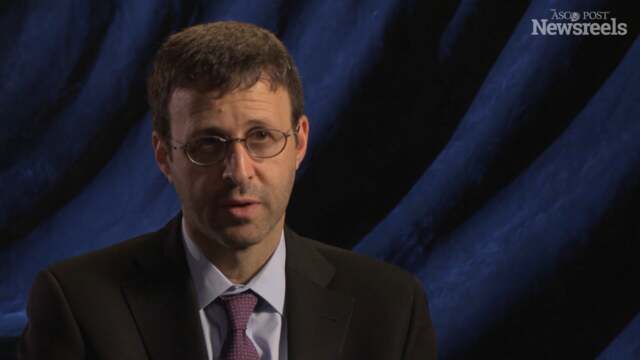
Somnath Mukherjee, MD, on Esophageal Adenocarcinoma: Results of the NEOSCOPE Trial
2016 Gastrointestinal Cancers Symposium
Somnath Mukherjee, MD, of Oxford University, discusses this phase II study of induction chemotherapy followed by either oxaliplatin/capecitabine- or paclitaxel/carboplatin-based chemoradiation as a pre-operative regimen for resectable esophageal cancer.. (Abstract 3).
Simron Singh, MD
Simron Singh, MD, of the Toronto Sunnybrook Cancer Centre, discusses an analysis of data from this phase III study on the efficacy and safety of everolimus in advanced, progressive, nonfunctional neuroendocrine tumors of the GI tract and unknown primary (Abstract 315).
Dung T. Le, MD
Dung T. Le, MD, from Johns Hopkins University Sidney Kimmel Comprehensive Cancer Center, discusses study findings on the safety and activity of nivolumab monotherapy in advanced and metastatic gastric or gastroesophageal junction cancer (Abstract 6).
Dung T. Le, MD
Dung T. Le, MD, from Johns Hopkins University Sidney Kimmel Comprehensive Cancer Center, reports findings on this agent, which showed promising activity in patients with previously treated progressive, advanced cancer (Abstract 195).
Krzysztof Bujko, MD
Krzysztof Bujko, MD, of the Maria Skłodowska Curie Memorial Cancer Centre, discusses the results of a multicenter Polish study on neoadjuvant chemoradiation for fixed cT3 or cT4 rectal cancer (Abstract 489).
Richard S. Finn, MD
Richard S. Finn, MD, of the University of California Los Angeles Medical Center, summarizes a session on treatments for advanced hepatocellular carcinoma (Abstract 192).