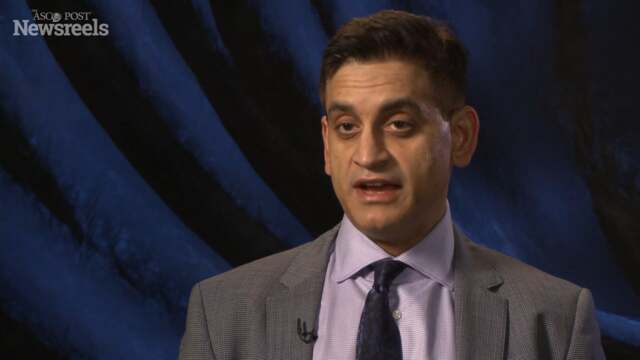
Yoon-Koo Kang, MD, PhD, on Gastric/Gastroesophageal Junction Adenocarcinoma: Trial Results for T-DM1 vs a Taxane
2016 Gastrointestinal Cancers Symposium
Yoon-Koo Kang, MD, PhD, of the Asan Medical Center, discusses findings from this multicenter, phase II/III study of ado-trastuzumab emtansine vs a taxane in patients with previously treated HER2-positive locally advanced or metastatic gastric/gastroesophageal junction adenocarcinoma (Abstract 5).
Heinz-Josef Lenz, MD
Heinz-Josef Lenz, MD, of the USC Norris Comprehensive Cancer Center, discusses in German the findings of this phase II study of mFOLFOX6/bevacizumab vs FOLFIRI/bevacizumab with biomarker stratification in patients with metastatic colorectal cancer (Abstract 493).
Toshihiko Doi, MD, PhD
Toshihiko Doi, MD, PhD, of Japan’s National Cancer Center Hospital East, discusses updated results on pembrolizumab for advanced esophageal cancer (Abstract 7).
Heinz-Josef Lenz, MD
Heinz-Josef Lenz, MD, of the USC Norris Comprehensive Cancer Center, discusses the findings of this phase II study of mFOLFOX6/bevacizumab vs FOLFIRI/bevacizumab with biomarker stratification in patients with metastatic colorectal cancer (Abstract 493). To view the German language version of this newsreel, click here.
Krzysztof Bujko, MD
Krzysztof Bujko, MD, of the Maria Skłodowska Curie Memorial Cancer Centre, discusses the results of a multicenter Polish study on neoadjuvant chemoradiation for fixed cT3 or cT4 rectal cancer (Abstract 489).
Simron Singh, MD
Simron Singh, MD, of the Toronto Sunnybrook Cancer Centre, discusses an analysis of data from this phase III study on the efficacy and safety of everolimus in advanced, progressive, nonfunctional neuroendocrine tumors of the GI tract and unknown primary (Abstract 315).