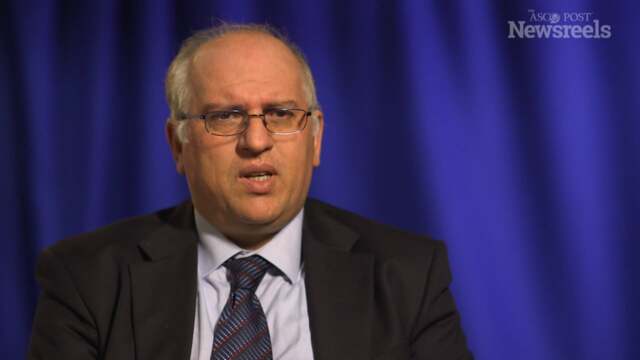
Ezra E.W. Cohen, MD, on Head and Neck Cancer: Results of the ACTIVE8 Trial
2016 ESMO Congress
Ezra E.W. Cohen, MD, of the University of California, San Diego, discusses study findings on chemotherapy plus cetuximab in combination with motolimod immunotherapy in patients with recurrent or metastatic squamous cell carcinoma of the head and neck. (Abstract LBA37)
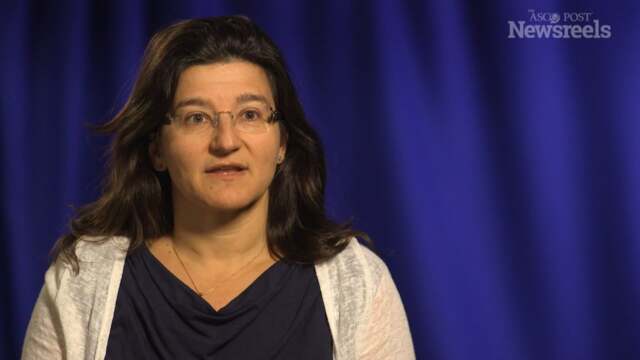
Janessa J. Laskin, MD, of the British Columbia Cancer Agency, discusses the ways in which availability of tumor gene expression data facilitates clinical decision-making for patients with advanced cancers. (Abstract 1519O)
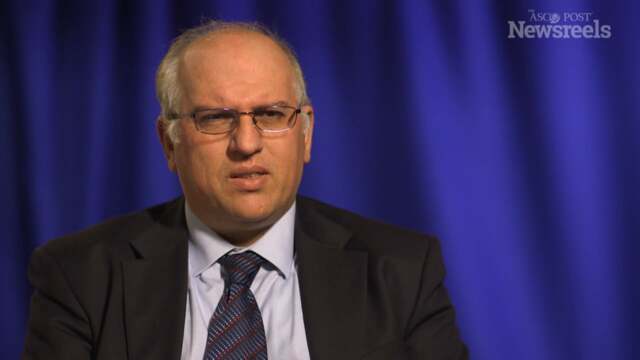
Paolo A. Ascierto, MD, of the Istituto Nazionale Tumori–Fondazione Pascale, discusses overall survival and safety results from a phase III trial of ipilimumab at 3 mg/kg vs 10 mg/kg in patients with metastatic melanoma. (Abstract 1106O)
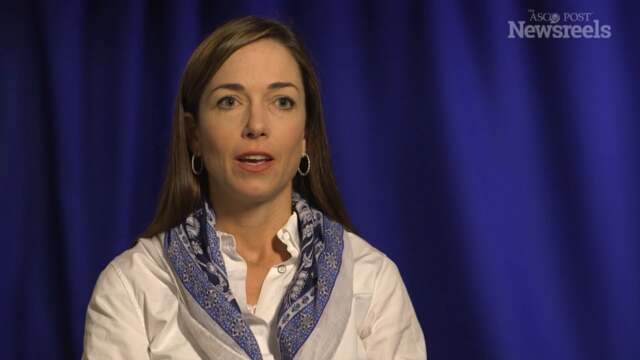
Sara A. Hurvitz, MD, of the University of California, Los Angeles, discusses interim findings on abemaciclib in postmenopausal women with HR+/HER2- breast cancer. (Abstract LBA13)
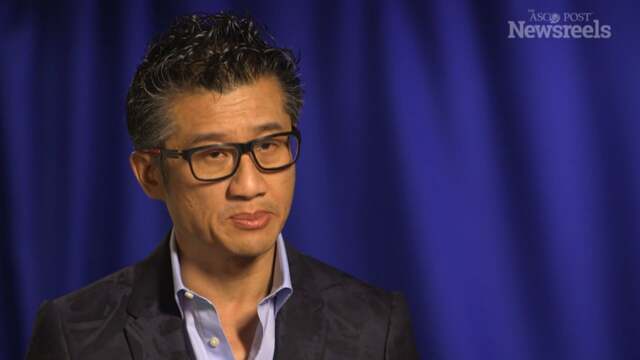
Tony Mok, MD, of The Chinese University of Hong Kong, discusses the final overall survival analysis from this trial on gefitinib/chemotherapy vs chemotherapy in EGFR mutation-positive non-small cell lung cancer after progression on first-line gefitinib. (Abstr 1201O)
Paolo A. Ascierto, MD, of the Istituto Nazionale Tumori–Fondazione Pascale, discusses in Italian overall survival and safety results from a phase 3 trial of ipilimumab at 3 mg/kg vs 10 mg/kg in patients with metastatic melanoma. (Abstract 1106O)