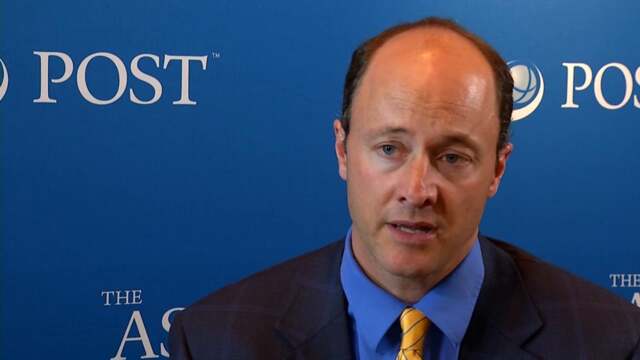
Mario E. Lacouture, MD, on Management of Dermatologic Toxicities Associated With Targeted Therapies
2015 NCCN Annual Conference
Mario E. Lacouture, MD, of Memorial Sloan Kettering Cancer Center, discusses the effect on patients of dermatologic toxicities associated with targeted therapies: their psychosocial impact, financial burden, physiological pain, and potential to alter therapy. But the side effects of targeted treatments can and should be addressed.
Eric Jonasch, MD
Eric Jonasch, MD, of The University of Texas, MD Anderson Cancer Center, discusses the progress being made in kidney cancer treatment and the clinical trials that focused on sunitinib, sorafenib, and everolimus, among others.
Thomas A. D’Amico, MD
Thomas A. D’Amico, MD, of Duke Cancer Institute, discusses the superior efficacy of thoracoscopic lobectomy. This minimally invasive procedure is used in only 50% of lung cancer surgeries in the United States, in 30% of procedures in Asia, and in as few as 10% to 20% of procedures in Europe.
William G. Wierda, MD, PhD
William G. Wierda, MD, PhD, of The University of Texas MD Anderson Cancer Center, discusses the latest information on managing CLL and his optimism that a cure is in sight.
Kenneth C. Anderson, MD
Kenneth C. Anderson, MD, of Dana-Farber/Brigham and Women’s Cancer Center, discusses the incredible progress made in treating multiple myeloma, with nine therapeutic options approved in the past decade, two drugs approved this year, and a number of new options on the horizon.
Andrew J. Armstrong, MD, ScM
Andrew J. Armstrong, MD, ScM, of Duke Cancer Institute, discusses the recent practice-changing landmark studies that showed significant increases in survival for men with castration-resistant prostate cancer and led to updates in the NCCN Guidelines for this disease.