Mary K. Gospodarowicz, MD, on Challenges in Cancer Control
2015 European Cancer Congress
Mary K. Gospodarowicz, MD, of Princess Margaret Hospital, discusses the work of the Global Task Force on Radiotherapy for Cancer Control and its efforts to improve access to vital radiation treatment worldwide, especially in low- and middle-income countries.
Martine J. Piccart-Gebhart, MD, PhD
Martine J. Piccart-Gebhart, MD, PhD, of the Jules Bordet Institute, discusses the ESMO initiative to make cancer drugs affordable.
Frederic Amant, MD, PhD
Frederic Amant, MD, PhD, of the Katholieke Universiteit Leuven, discusses the important decisions that must be made when a woman is diagnosed with cancer while pregnant: Should treatment be delayed or the pregnancy terminated?
Jonathan E. Rosenberg, MD
Jonathan E. Rosenberg, MD, of Memorial Sloan Kettering Cancer Center, discusses this pivotal study of an investigational immunotherapy that has shown increased and durable responses, with a relatively benign toxicity profile (Abstract 21LBA).
Toni K. Choueiri, MD
Toni K. Choueiri, MD, of the Dana-Farber Cancer Institute, discusses results of the phase III METEOR trial in advanced renal cell carcinoma, which evaluated the efficacy of cabozantinib compared to everolimus in patients with disease progression after VEGFR-targeted therapy (Abstract 4LBA).
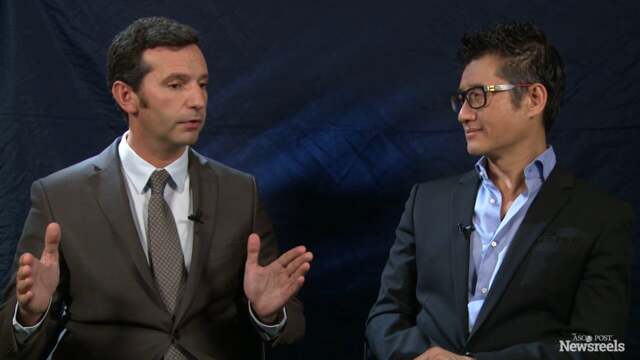
Benjamin Besse, MD, PhD, and Tony Mok, MD
Benjamin Besse, MD, PhD, of the Institut Gustave Roussy, and Tony Mok, MD, of The Chinese University of Hong Kong, discuss this phase II trial of atezolizumab as first-line or subsequent therapy for locally advanced or metastatic PD-L1–selected NSCLC (Abstract 17LBA).