Nathan Hale Fowler, MD, on Follicular Lymphoma: Ibrutinib Plus Rituximab Study Results
2015 ASH Annual Meeting
Nathan Hale Fowler, MD, of MD Anderson Cancer Center, discusses a multicenter trial in which ibrutinib plus rituximab was administered to treatment-naive patients with follicular lymphoma (Abstract 470).
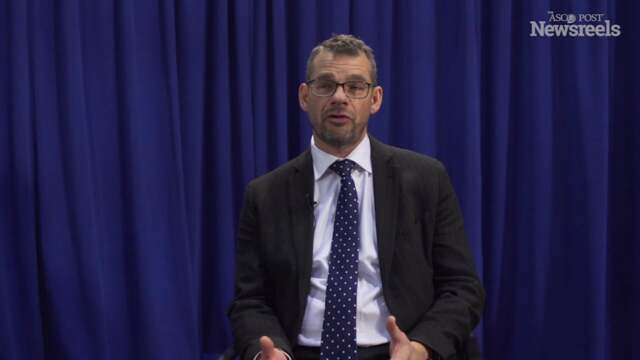
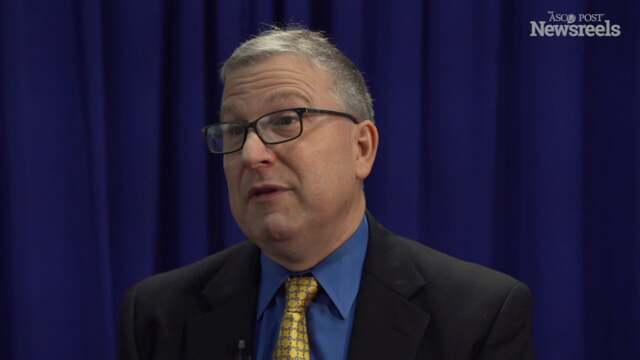
Andrew D. Zelenetz, MD, PhD, and Stephan Stilgenbauer, MD, PhD
Andrew D. Zelenetz, MD, PhD, of Memorial Sloan Kettering Cancer Center, and Stephan Stilgenbauer, MD, PhD, of the University of Ulm, discuss this late-breaking abstract on venetoclax monotherapy and deep remissions in ultra-high risk relapsed/refractory chronic lymphocytic leukemia with 17p deletion (Abstract LBA6).
Julie Vose, MD, MBA, and David Straus, MD
Julie Vose, MD, MBA, of the University of Nebraska Medical Center, and David Straus, MD, of Memorial Sloan Kettering Cancer Center, discuss the initial results of the U.S. Intergroup Trial of response-adapted chemotherapy or chemotherapy/radiation therapy based on PET for nonbulky stage I and II Hodgkin lymphoma (Abstract 578).
Simon Rule, MD
Simon Rule, MD, of Derriford Hospital, discusses results from an international, multicenter study in patients with previously treated mantle cell lymphoma (Abstract 469).
John Leonard, MD
John Leonard, MD, of Weill Cornell Medical College, discusses this phase II study of R-CHOP with or without bortezomib in patients with untreated non-germinal center B-cell-like subtype diffuse large cell lymphoma (Abstract 811).
Sagar Lonial, MD
Sagar Lonial, MD, of Emory University School of Medicine, summarizes his educational session on this vital topic.