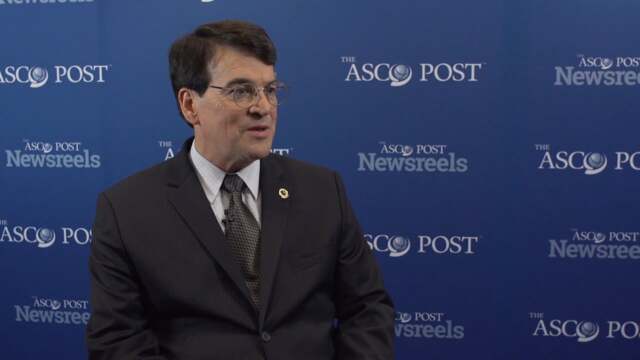
Laurie H. Sehn, MD, MPH, on Classical HL: New Findings on the Need for Radiotherapy
2015 ASH Annual Meeting
Laurie H. Sehn, MD, MPH, of the British Columbia Cancer Agency, discusses a study that showed patients with advanced-stage classical Hodgkin lymphoma, with a negative PET-scan following ABVD chemotherapy, have excellent outcomes without the need for consolidative radiotherapy, regardless of disease bulk at presentation (Abstract 579).
Sagar Lonial, MD, and Alessandra Tedeschi, MD
Sagar Lonial, MD, of the Emory University School of Medicine, and Alessandra Tedeschi, MD, of the Azienda Ospedaliera Niguarda Cà Granda, discuss this international study of ibrutinib vs chlorambucil in patients 65 years and older with treatment-naive chronic lymphocytic leukemia or small lymphocytic lymphoma (Abstract 495).
Mikkael A. Sekeres, MD
Mikkael A. Sekeres, MD, of the Cleveland Clinic, discusses an additional analysis of a phase II study of azacitidine combined with lenalidomide or with vorinostat vs azacitidine monotherapy in higher-risk myelodysplastic syndromes and chronic myelomonocytic leukemia (Abstract 908).
Richard M. Stone, MD
Richard M. Stone, MD, of the Dana-Farber Cancer Institute, discusses this international prospective study on the survival impact of midostaurin, a multikinase inhibitor, in newly diagnosed acute myeloid leukemia with FLT3 mutations (Abstract 6).
S. Vincent Rajkumar, MD
S. Vincent Rajkumar, MD, of the Mayo Clinic, summarizes his education session on the evolving diagnostic criteria for myeloma, which focused on smoldering disease and when it becomes an “open flame.”
David A. Williams, MD
Outgoing ASH President, David A. Williams, MD, of the Dana-Farber/Boston Children’s Hospital, gives an overview of this year’s Annual Meeting of the American Society of Hematology.