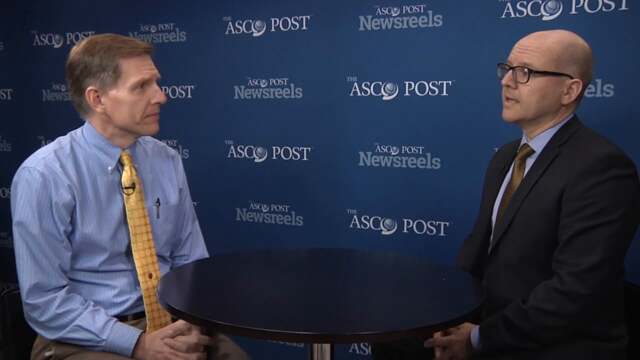
Nicholas David James, MD, PhD, and Celestia S. Higano, MD, on Results From the STAMPEDE Trial on Hormone-Naive Prostate Cancer
2015 ASCO Annual Meeting
Celestia S. Higano, MD, of the University of Washington, and Nicholas David James, MD, PhD, of Warwick Medical School, discuss data showing improvements in survival from adding docetaxel in men starting long-term hormone therapy for the first time (Abstract 5001).
John Smyth, MD
John Smyth, MD, of the University of Edinburgh, discusses oncology from an international point of view.
Chloe Evelyn Atreya, MD, PhD, and Axel Grothey, MD
Chloe Evelyn Atreya, MD, PhD, of the University of California, San Francisco, talks with Axel Grothey, MD, of the Mayo Clinic, about new data on trametinib, dabrafenib, and panitumumab in patients with the BRAF V600E mutation and vemurafenib plus irinotecan and cetuximab in BRAF-mutated metastatic colorectal cancer (Abstracts 103 and 3511).
Richard G. Margolese, MD
Richard G. Margolese, MD, of McGill University discusses the improvement in breast cancer-free interval with anastrozole vs tamoxifen in patients with DCIS undergoing lumpectomy plus radiotherapy (Abstract LBA500).
Howard I. Scher, MD
Howard I. Scher, MD, of Memorial Sloan Kettering Cancer Center, discusses the updated criteria that will guide clinical trial design and conduct for therapeutics being tested in castration-resistant prostate cancer (Abstract 5000).
Andrew James Martin, PhD, and Anthony J. Olszanski, RPh, MD
Andrew James Martin, PhD, of NHMRC Clinical Trials Centre, University of Sydney, and Anthony J. Olszanski, RPh, MD, of Fox Chase Cancer Center, discuss a form of vitamin B3 that reduced the incidence of new nonmelanoma skin cancers in high-risk patients (Abstract 9000).