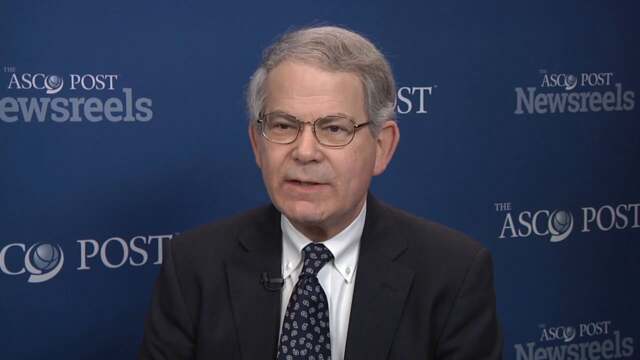
Luis G. Paz-Ares, MD, PhD, Summarizes Results of the CheckMate 057 Trial on Nonsquamous Cell NSCLC
2015 ASCO Annual Meeting
Luis G. Paz-Ares, MD, PhD, of the Hospital Universitario Doce De Octubre, discusses the superior overall survival in patients taking nivolumab vs docetaxel in advanced nonsquamous NSCLC (Abstract LBA109).
Jame Abraham, MD
Jame Abraham, MD, of the Cleveland Clinic discusses analyses of two trials for locally advanced, inflammatory, or early HER2-positive breast cancer using docetaxel, trastuzumab, pertuzumab, and neratinib (Abstracts 505 and 508).
Lee S. Schwartzberg, MD
Lee S. Schwartzberg, MD, of The West Clinic, describes a new initiative of the Association of Community Cancer Centers, designed to speed the adoption of immunotherapeutics in the community setting, where 60% of cancer patients are treated.
Charles L. Bennett, MD, PhD, MPP and James O. Armitage, MD
Charles L. Bennett, MD, PhD, MPP of the University of South Carolina College of Pharmacy, and James O. Armitage, MD, of the University of Nebraska Medical Center, discuss the emerging and future benefits of biosimilars.
Dung T. Le, MD, and Axel Grothey, MD
Dung T. Le, MD, of Sidney Kimmel Comprehensive Cancer Center at Johns Hopkins University, and Axel Grothey, MD, of the Mayo Clinic, discuss how mismatch repair status predicts clinical benefit of immune checkpoint blockade with pembrolizumab (Abstract LBA100).
James H. Doroshow, MD
James H. Doroshow, MD, of the National Cancer Institute, describes a new precision medicine initiative called the MATCH trial: Molecular Analysis for Therapy Choice. In 2,400 NCI clinical trial sites, 3,000 patients will be screened and their tumors analyzed to determine whether they contain genetic abnormalities for which a targeted drug exists.