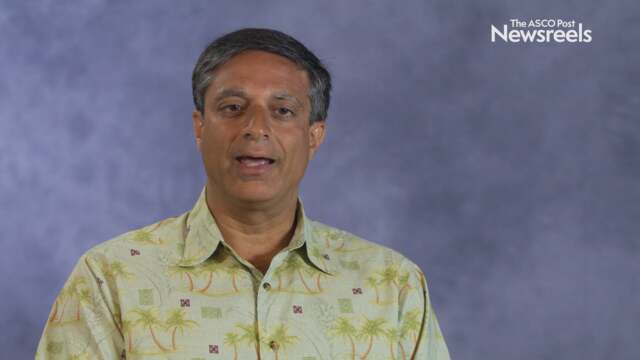
Andrew D. Zelenetz, MD, PhD, on NHL: Clinical Applications of Genomic Studies
Pan Pacific Lymphoma Conference 2018Andrew D. Zelenetz, MD, PhD, of Memorial Sloan Kettering Cancer Center, discusses the various ways genomics can be used in diagnosing and treating non-Hodgkin lymphoma and the need for a proper support tool to help interpret the data.
Related Videos
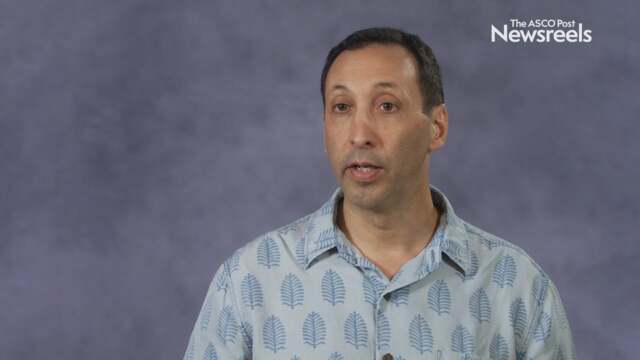
Steven M. Horwitz, MD, on CD 30+ PTCL Subtypes: Treatment Update
Steven M. Horwitz, MD, of Memorial Sloan Kettering Cancer Center, discusses aggressive subtypes of peripheral T-cell lymphoma and the coming data that may help clarify what could be the most effective treatments.
Julie M. Vose, MD, MBA, on Lymphoma: Novel Pathways for Targeted Agents
Julie M. Vose, MD, MBA, of the University of Nebraska Medical Center, discusses promising pathways for inhibitors—BTK, PI3K, EZH2, bcl-2—and the clinical trials for single agents and combinations that suggest their potential for lymphoma treatment.
Susan M. O’Brien, MD, on CLL: Sequencing Therapy Options
Susan M. O’Brien, MD, of the University of California, Irvine, discusses three oral agents for the treatment of chronic lymphocytic leukemia/small lymphocytic lymphoma, and the use of chemotherapy for the disease.
Susan Blumel, RN, BSN, and Laura J. Zitella, MS, RN, ACNP-BC, AOCN, on Managing Toxicities of Immunotherapy
Susan Blumel, RN, BSN, of the University of Nebraska Medical Center, and Laura J. Zitella, MS, RN, ACNP-BC, AOCN, of Stanford Health Center, discuss immunotherapy, CAR T-cell toxicities, and the principles of team management.
John G. Gribben, MD, DSc, on The Tumor Microenvironment, Prognosis, and Outcome
John G. Gribben, MD, DSc, of the Barts Cancer Institute, discusses how understanding the role of the tumor microenvironment can help identify treatment targets, including combination therapies, and improve outcome for patients with indolent lymphomas.