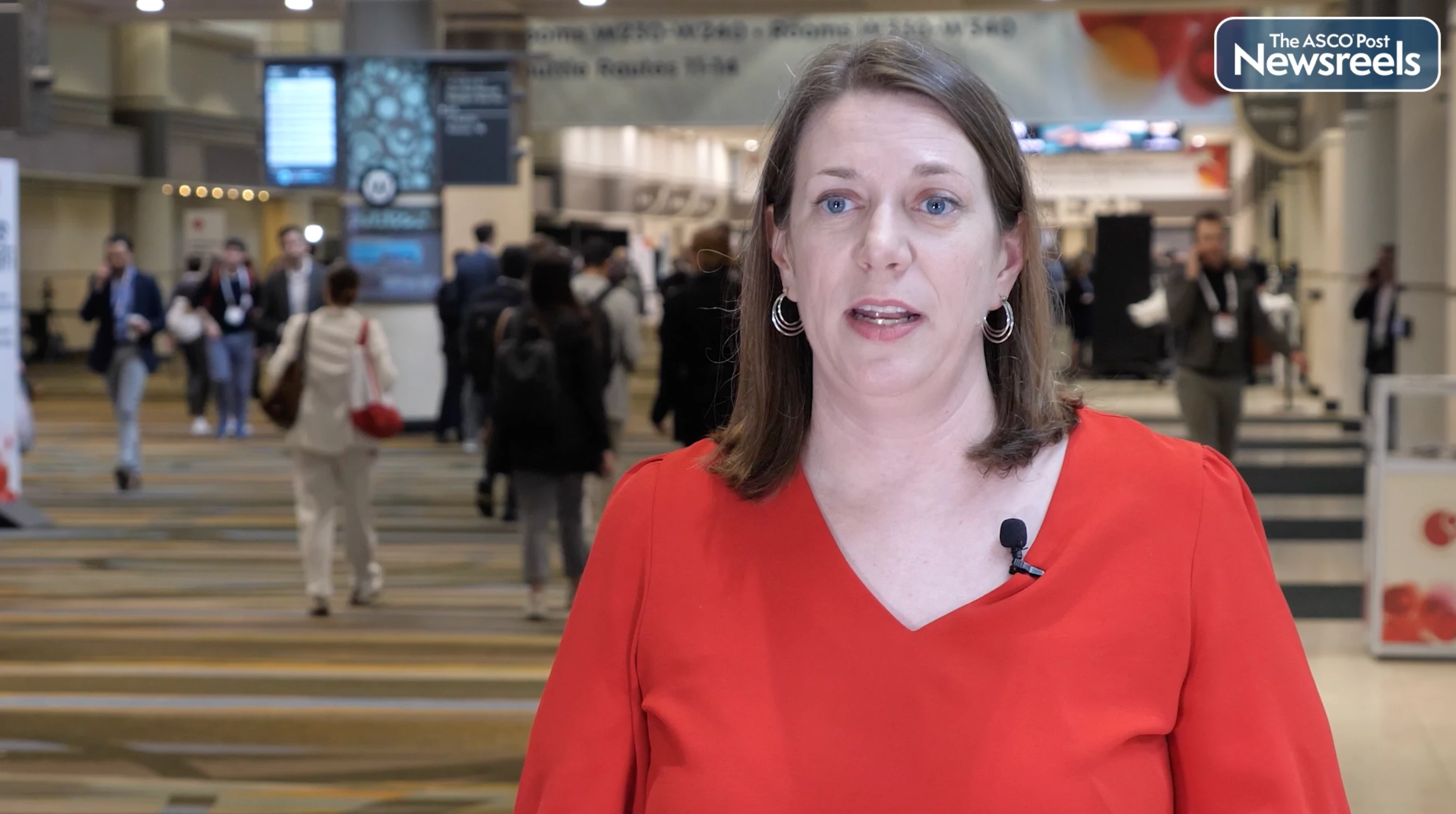
Ibrahim Aldoss, MD, on Older Adults With B-Cell ALL: CD19 CAR T-Cell Therapy
ASH 2025
Ibrahim Aldoss, MD, of City of Hope, presents findings from a small, single-center study of patients aged 55 years and older with B-cell acute lymphoblastic leukemia (ALL) in first complete remission who were treated with CD19-directed CAR T-cell therapy. Researchers found the therapy was safe, resulted in low-grade adverse events, and led to preliminary durable measurable residual disease response (Abstract 443).
The ASCO Post Staff
Krina Patel, MD, MSc, of The University of Texas MD Anderson Cancer Center, provides updated results from the fully enrolled, ongoing iMMagine-1 phase II registrational trial of anitocabtagene autoleucel, an autologous anti-BCMA CAR T-cell therapy with a novel D-domain binder. The agent is under development for patients with relapsed and/or refractory multiple myeloma (Abstract 256).
The ASCO Post Staff
Jennifer Woyach, MD, of The Ohio State University Comprehensive Cancer Center, reviews phase I data on rocbrutinib, a new selective next-generation inhibitor of Bruton’s tyrosine kinase (BTK), in patients with relapsed/refractory chronic lymphocytic leukemia (CLL) and prior exposure to BTK and/or BCL-2 inhibitors (Abstract 87).
The ASCO Post Staff
Amer Zeidan, MBBS, of Yale School of Medicine, discusses findings from an analysis of the IMerge trial, which explored the possible association between imetelstat-related cytopenias and hemoglobin increase—a measure linked to red blood cell transfusion independence achievement—in patients with lower-risk myelodysplastic syndromes (MDS) (Abstract 490).
The ASCO Post Staff
Anand Patel, MD, of the University of Chicago, discusses results from a phase II trial that showed tyrosine kinase inhibitor plus inotuzumab ozogamicin–based therapy resulted in major molecular response in patients newly diagnosed with Philadelphia chromosome (Ph)-positive acute lymphoblastic leukemia (ALL) (Abstract 441).
The ASCO Post Staff
Jennifer Woyach, MD, of The Ohio State University Comprehensive Cancer Center, discusses results from the first head-to-head comparison of pirtobrutinib vs ibrutinib in treatment-naive patients and patients with covalent Bruton tyrosine kinase inhibitor–naive relapsed/refractory chronic lymphocytic leukemia/small lymphocytic lymphoma (CLL/SLL) (Abstract 683).