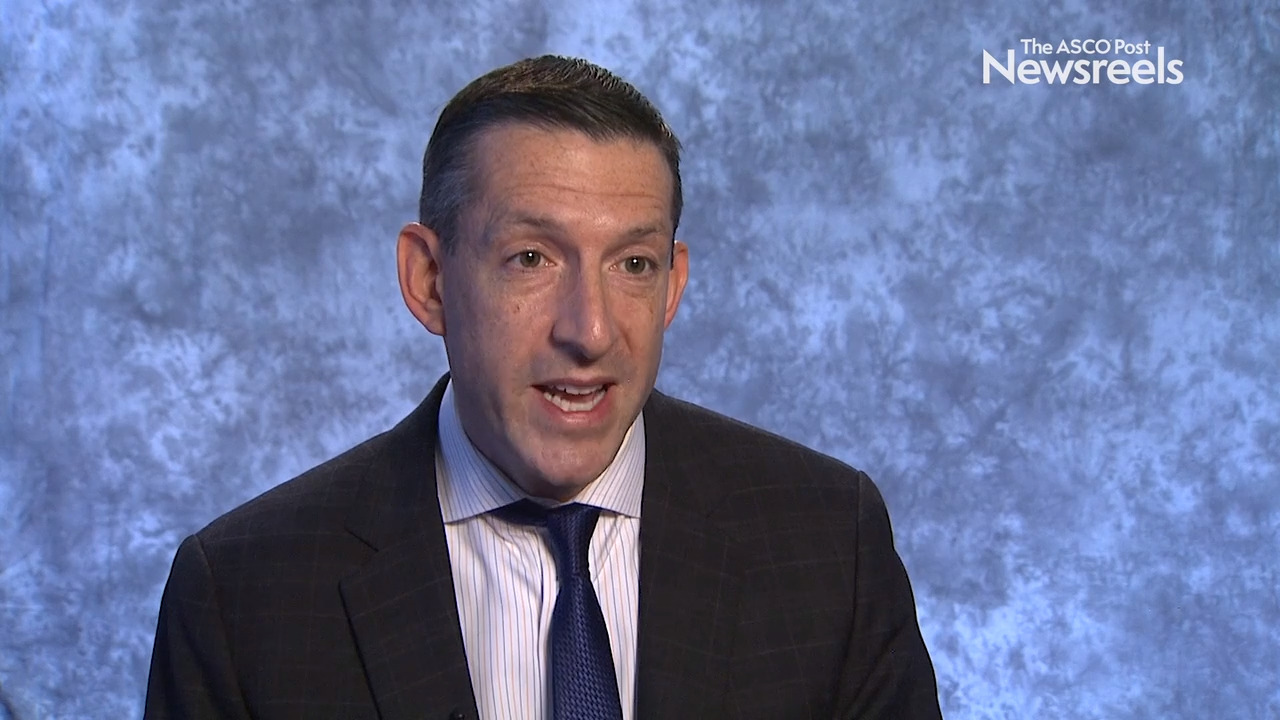
Andreas Burchert, MD, on AML: Results From the Sormain Trial
2018 ASH Annual Meeting & Exposition
Andreas Burchert, MD, of the Philipps University of Marburg, discusses study findings on sorafenib as maintenance therapy after allogeneic stem cell transplantation for FLT3-ITD–positive acute myeloid leukemia.
Julie Vose, MD, MBA, of the University of Nebraska Medical Center, and Loretta J. Nastoupil, MD, of The University of Texas MD Anderson Cancer Center, discuss findings from a multicenter study of axicabtagene ciloleucel CD19 CAR T-cell therapy for relapsed or refractory aggressive B-cell lymphoma when used as a standard of care (Abstract 91).
Steven M. Horwitz, MD, of Memorial Sloan Kettering Cancer Center, discusses phase III findings on brentuximab vedotin and CHP vs CHOP in the front-line treatment of patients with CD30-positive peripheral T-cell lymphomas (Abstract 997).
John P. Leonard, MD, of Weill Cornell Medicine/Cornell University, discusses phase III findings on lenalidomide plus rituximab vs rituximab plus placebo for people with relapsed or refractory indolent non-Hodgkin lymphoma (Abstract 445).
Alexander B. Pine, MD, PhD, of Yale School of Medicine, discusses a survey gathering data on health-care providers’ practices and preferences in using direct oral anticoagulant therapy to treat venous thromboembolism.
Readers of The ASCO Post are invited to participate in this research by completing the survey, entitled: “Perspectives and Practices in Utilization of Direct Oral Anticoagulants in Patients With Cancer-Associated Venous Thromboembolism.” The survey takes approximately 3 to 4 minutes to complete and can be taken on a mobile device or a computer. The survey link is https://yalesurvey.ca1.qualtrics.com/jfe/form/SV_3l0HxrreWZhVtBz.
Mikkael A. Sekeres, MD, of the Cleveland Clinic, discusses phase III study findings on luspatercept to treat anemia in patients with very low-, low-, or intermediate-risk myelodysplastic syndromes with ring sideroblasts who require red blood cell transfusions (Abstract 1).