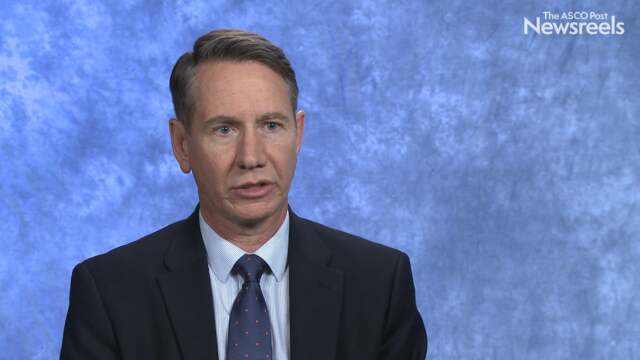
Linda Mileshkin, MBBS, on Solid Tumors: Early Treatment Study Results
2018 ASCO-SITC Clinical Immuno-Oncology Symposium
Linda Mileshkin, MBBS, of the Peter MacCallum Cancer Centre, discusses phase Ib trial findings on the anti–PD-1 monoclonal antibody BGB-A317 in combination with the PARP inhibitor BGB-290 in advanced solid tumors.
Roy S. Herbst, MD, PhD, of the Yale School of Medicine, summarizes a session that included discussion of the mechanisms of immunotherapies, biomarkers for activity of these agents, overcoming resistance, and using treatment combinations.
Kristen Fousek, PhD Candidate at Baylor College of Medicine, discusses her preclinical work on targeting CD19-negative relapsed B-cell acute lymphoblastic leukemia, using CAR T cells that target three antigens simultaneously, a technique that addresses the growing problem of relapse (Abstract 121).
Mary L. Disis, MD, of the University of Washington, discusses innate and adaptive immune system cells, T cells as key to mediating antitumor immunity, and the mechanisms by which cancer evades the immune system.
Jeffrey M. Lemons, MD, of the University of Chicago, discusses early safety and efficacy findings from a small study on pembrolizumab and multiorgan-site ablative stereotactic body radiotherapy in patients with advanced solid tumors (Abstract 20).
Stephen M. Ansell, MD, PhD, of the Mayo Clinic, discusses integrating immune checkpoint inhibitors, improving efficacy, and reducing toxicity when treating blood cancers.