William G. Wierda, MD, PhD, and Julie M. Vose, MD, MBA, on CLL: Results From the CAPTIVATE Trial
2018 ASCO Annual Meeting
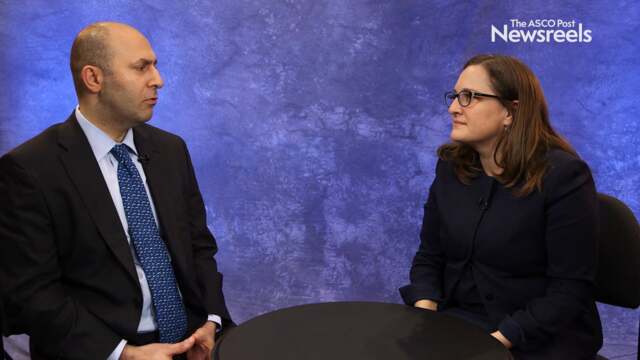
Julie M. Vose, MD, MBA, of the University of Nebraska Medical Center, and William G. Wierda, MD, PhD, of The University of Texas MD Anderson Cancer Center, discuss phase II findings on ibrutinib plus venetoclax in first-line treatment of chronic lymphocytic leukemia (Abstract 7502).
Danh Pham, MD, of the James Graham Brown Cancer Center, University of Louisville, discusses his findings using a registry on the low rates of screening with low-dose computed tomography, despite its potential to prevent thousands of lung cancer deaths each year (Abstract 6504).
David M. O’Malley, MD, of The Ohio State University College of Medicine, discusses phase Ib study findings on mirvetuximab soravtansine, a folate receptor alpha-targeting antibody-drug conjugate, in combination with bevacizumab in patients with platinum-resistant ovarian cancer (Abstract 5549).
Arnaud Méjean, MD, PhD, of the Hôpital Européen Georges Pompidou, discusses his study’s potentially practice-changing finding that nephrectomy is no longer the standard of care for patients with metastatic renal cell carcinoma (Abstract LBA3).
Toni K. Choueiri, MD, of Dana-Farber Cancer Institute, and Elizabeth R. Plimack, MD, of Fox Chase Cancer Center, offer their analysis of two key studies presented in renal cell cancer.
Rita Elias Assi, MD, of The University of Texas MD Anderson Cancer Center, discusses the impact of next-generation sequencing on treatment selection in acute myeloid leukemia (Abstract 103).