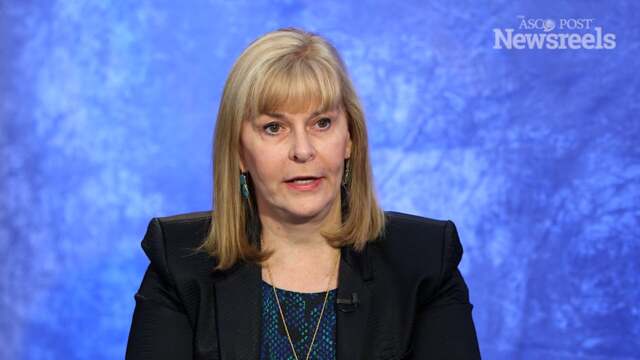
Lisa A. Carey, MD, and Mark E. Robson, MD, on HER2-Negative Breast Cancer: Results From the OlympiAD Trial
2017 ASCO Annual Meeting
Lisa A. Carey, MD, of the University of North Carolina, and Mark E. Robson, MD, of Memorial Sloan Kettering Cancer Center, discuss phase III study findings on olaparib monotherapy vs chemotherapy for patients with HER2-negative metastatic breast cancer and a germline BRCA mutation. (Abstract LBA4)
Jame Abraham, MD, of the Cleveland Clinic, gives his views on findings on abemaciclib in combination with fulvestrant in patients with HR+/HER2- advanced breast cancer who progressed on endocrine therapy. (Abstract 1000)
Sumanta K. Pal, MD, of City of Hope, and Toni K. Choueiri, MD, of the Dana-Farber Cancer Institute, exchange views on the key papers in renal cell carcinoma presented at ASCO’s 2017 nonprostate GU oral abstract session. (Abstracts 4504, 4505, 4506, 4507, 4508)
Elizabeth R. Plimack, MD, of Fox Chase Cancer Center, discusses highlights of three important abstracts on advanced and metastatic urothelial cancer presented at the 2017 ASCO Annual Meeting. (Abstracts 4501, 4503, 106)
Gary Rodin, MD, of the University of Toronto, discusses study findings on a systematic approach to alleviating distress and managing predictable challenges. (Abstract LBA10001)
Julie Vose, MD, MBA, of the University of Nebraska Medical Center, discusses two hematologic abstracts: results from the OPTIMAL>60 study on radiotherapy to bulky disease PET-negative after immunochemotherapy in elderly patients with diffuse large B-cell lymphoma; and an analysis of autologous vs matched sibling donor or matched unrelated donor allogeneic hematopoietic cell transplantation in follicular lymphoma patients with early chemoimmunotherapy failure. (Abstracts 7506, 7508)