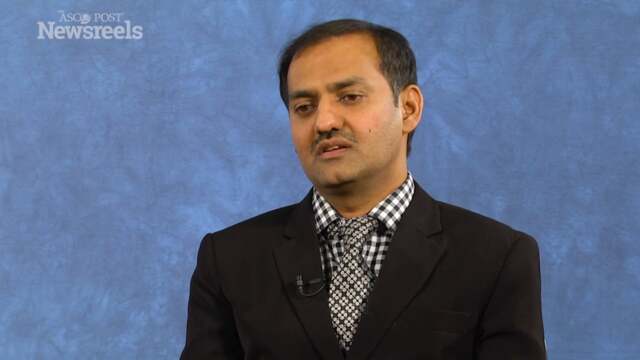
Samuel Smith, PhD, on Tamoxifen Adherence: Results of the IBIS-1 Study
2016 San Antonio Breast Cancer Symposium
Samuel Smith, PhD, of Queen Mary University of London, discusses study findings on menopausal symptoms as predictors of long‐term adherence in an International breast cancer intervention study (Abstract S5-03).
Nikhil Wagle, MD, Dana-Farber Cancer Institute, discusses the genomic sequencing of ER-positive metastatic breast cancer that has become resistant to therapies and the implications for the choice of next therapy, clinical trial eligibility, and novel drug targets (Abstract S1-01).
Aleix Prat, MD, PhD, of the University of Barcelona, discusses in Spanish study findings on intrinsic subtype as a predictor of pathologic complete response following neoadjuvant dual HER2 blockade without chemotherapy in HER2-positive breast cancer (Abstract S3-03).
Lisa A. Carey, MD, of the University of North Carolina, discusses a session she moderated on key data presented at SABCS, and gives her expert views on putting the research data into clinical practice.
Rowan T. Chlebowski, MD, PhD, of the David Geffen School of Medicine at UCLA, discusses findings from the Women’s Health Initiative Dietary Modification study on low-fat diet and breast cancer overall survival (Abstract S5-04).
S.P. Somashekhar, MBBS, MCh(Onco), of the Manipal Comprehensive Cancer Centre, discusses a study to assess the performance of IBM's artificial intelligence platform in comparison to a multidisciplinary tumor board (Abstract S6-07).