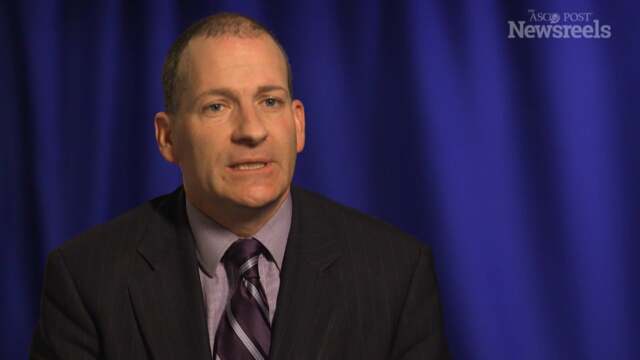
Martin H. Schuler, MD, on Gastric and GEJ Adenocarcinoma: Results of the FAST Study (German Language Version) 
2016 ESMO Congress
Martin H. Schuler, MD, of the University Hospital Essen, discusses in German findings from this phase II trial of epirubicin, oxaliplatin, and capecitabine with or without the antibody IMAB362 as first-line therapy in patients with advanced CLDN18.2+ disease. (Abstract 614O)
Fabrice Barlesi, MD, PhD, of Aix Marseille University and Assistance Publique Hopitaux De Marseille, discusses phase III findings on a comparison of atezolizumab with docetaxel in patients with advanced non-small cell lung cancer. (Abstract LBA44)
Matthew J. Ellis, PhD, MB, BCh, of the Baylor College of Medicine, discusses phase III study findings on fulvestrant 500 mg vs anastrozole for hormone receptor-positive advanced disease. (Abstract LBA14)
Jung-min Lee, MD, of the National Cancer Institute, discusses findings of a phase II study of the cell cycle checkpoint kinase inhibitors LY2606368 and prexasertib monomesylate monohydrate in sporadic high-grade serous and germline BRCA mutation-associated ovarian cancer. (Abstract 855O)
Janessa J. Laskin, MD, of the British Columbia Cancer Agency, discusses the ways in which availability of tumor gene expression data facilitates clinical decision-making for patients with advanced cancers. (Abstract 1519O)
Christopher J. Sweeney, MBBS, of the Dana-Farber Cancer Institute, discusses how this early clinical endpoint will accelerate the development of new therapies for localized intermediate and high-risk prostate cancer. (Abstract 717O)