Sébastien Maury, MD, on ALL: Results of the Graall-R 2005 Study
2015 ASH Annual Meeting
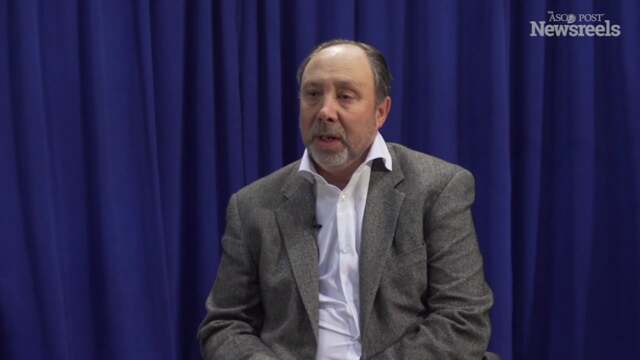
Sébastien Maury, MD, of the Hôpital Henri Mondor, discusses this study in which adding rituximab improved the outcome of adult patients with CD20-positive, Ph-negative B-cell precursor acute lymphoblastic leukemia (Abstract 1). To see the French language version of this newsreel, please click here.
Olivier Casasnovas, MD
Olivier Casasnovas, MD, of Hôpital Le Bocage, discusses in French a phase III study comparing an early PET-driven treatment de-escalation to a not PET-monitored strategy in patients with advanced Hodgkin lymphoma (Abstract 577).
Dr. Robert Rifkin, Medical Director of Biosimilars at US Oncology Research, moderates a roundtable discussion on Global Perspectives on the Integration of Biosimilars into Oncology Practice, held in conjunction with the 2015 American Society of Hematology Annual Meeting in Orlando, Florida.
Moderator: Robert Rifkin, MD
Participants: Corey Cutler, MD; Pere Gascon, MD, PhD; Mark McCamish, MD, PhD
This program is supported by Sandoz Inc.
Craig H. Moskowitz, MD
Craig H. Moskowitz, MD, of Memorial Sloan Kettering Cancer Center, discusses a phase I study of an anti-CD19 monoclonal antibody used in relapsed/refactory B-lineage non-Hodgkin lymphoma (Abstract 182).
Andrew D. Zelenetz, MD, PhD, and Stephan Stilgenbauer, MD, PhD
Andrew D. Zelenetz, MD, PhD, of Memorial Sloan Kettering Cancer Center, and Stephan Stilgenbauer, MD, PhD, of the University of Ulm, discuss this late-breaking abstract on venetoclax monotherapy and deep remissions in ultra-high risk relapsed/refractory chronic lymphocytic leukemia with 17p deletion (Abstract LBA6).
Olivier Casasnovas, MD
Olivier Casasnovas, MD, of Hôpital Le Bocage, discusses a phase III study comparing an early PET-driven treatment de-escalation to a not PET-monitored strategy in patients with advanced Hodgkin lymphoma (Abstract 577). To see the French language version of this video, please click here.