Ronald Go, MD, on Survival in NHL and Treatment Facility Volume
2015 ASH Annual Meeting
Ronald Go, MD, of the Mayo Clinic, discusses a study that used the National Cancer Data Base to determine the extent to which the number of non-Hodgkin lymphoma patients treated annually in a facility affects overall survival (Abstract 266).
Kieron Dunleavy, MD
Kieron Dunleavy, MD, of the National Cancer Institute, discusses a multi-center trial that set out to validate the effectiveness of DA-EPOCH-R-based therapy and whether a risk-adapted approach using the regimen is beneficial for patients with Burkitt lymphoma (Abstract 342).
Andrew D. Zelenetz, MD, PhD, and Stephan Stilgenbauer, MD, PhD
Andrew D. Zelenetz, MD, PhD, of Memorial Sloan Kettering Cancer Center, and Stephan Stilgenbauer, MD, PhD, of the University of Ulm, discuss this late-breaking abstract on venetoclax monotherapy and deep remissions in ultra-high risk relapsed/refractory chronic lymphocytic leukemia with 17p deletion (Abstract LBA6).
Sagar Lonial, MD, and Alessandra Tedeschi, MD
Sagar Lonial, MD, of the Emory University School of Medicine, and Alessandra Tedeschi, MD, of the Azienda Ospedaliera Niguarda Cà Granda, discuss this international study of ibrutinib vs chlorambucil in patients 65 years and older with treatment-naive chronic lymphocytic leukemia or small lymphocytic lymphoma (Abstract 495).
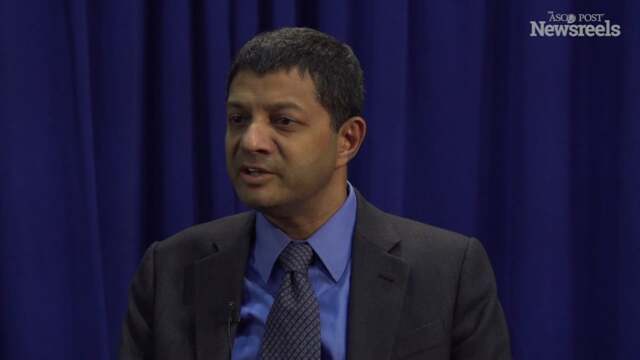
S. Vincent Rajkumar, MD
S. Vincent Rajkumar, MD, of the Mayo Clinic, summarizes a special FDA-sponsored session on the three myeloma drugs that were approved this November––daratumumab, ixazomib, and elotozumab––and their current and future roles in treating the disease.
Simon Rule, MD
Simon Rule, MD, of Derriford Hospital, discusses results from an international, multicenter study in patients with previously treated mantle cell lymphoma (Abstract 469).