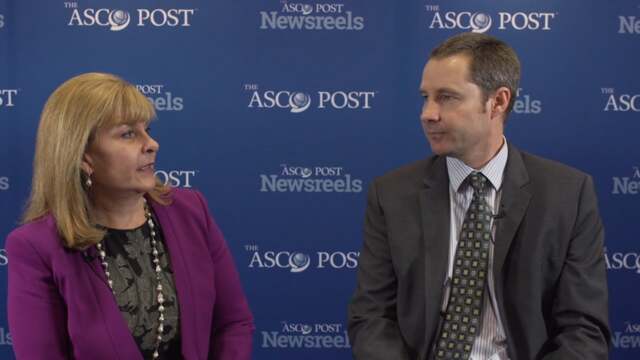
Olivier Casasnovas, MD, on Advanced-Stage Hodgkin Lymphoma: Interim Analysis of the Lysa Study (French Language Version) 
2015 ASH Annual Meeting
Olivier Casasnovas, MD, of Hôpital Le Bocage, discusses in French a phase III study comparing an early PET-driven treatment de-escalation to a not PET-monitored strategy in patients with advanced Hodgkin lymphoma (Abstract 577).
Olivier Casasnovas, MD
Olivier Casasnovas, MD, of Hôpital Le Bocage, discusses a phase III study comparing an early PET-driven treatment de-escalation to a not PET-monitored strategy in patients with advanced Hodgkin lymphoma (Abstract 577). To see the French language version of this video, please click here.
David Henry, MD
David Henry, MD, of Pennsylvania Hospital, discusses new advances with direct oral anticoagulants, or DOACs.
Richard M. Stone, MD
Richard M. Stone, MD, of the Dana-Farber Cancer Institute, discusses this international prospective study on the survival impact of midostaurin, a multikinase inhibitor, in newly diagnosed acute myeloid leukemia with FLT3 mutations (Abstract 6).
S. Vincent Rajkumar, MD
S. Vincent Rajkumar, MD, of the Mayo Clinic, summarizes a special FDA-sponsored session on the three myeloma drugs that were approved this November––daratumumab, ixazomib, and elotozumab––and their current and future roles in treating the disease.
Julie Vose, MD, MBA, and Cameron J. Turtle, MBBS, PhD
Julie Vose, MD, MBA, of the University of Nebraska Medical Center, and Cameron J. Turtle, MBBS, PhD, of the Fred Hutchinson Cancer Research Center, discuss anti-CD19 chimeric antigen receptor-modified T-cell therapy and clinical outcome (Abstract 184).