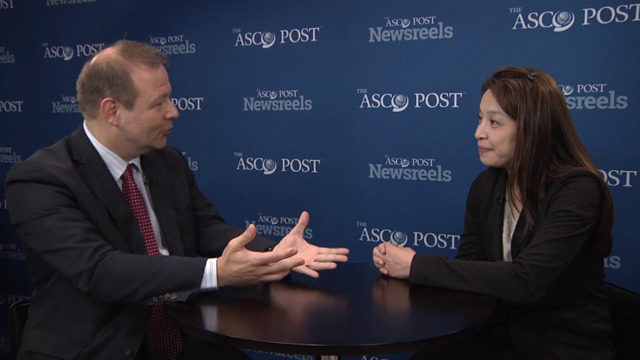
David E. Gerber, MD, and James L. Mulshine, MD, on Bringing Genomic Discovery and Targeted Therapies to Early-Stage Lung Cancer
2015 ASCO Annual Meeting
James L. Mulshine, MD, of Rush University Medical Center, and David E. Gerber, MD, of The University of Texas Southwestern Medical Center, discuss the ALCHEMIST trial, an NCI initiative to address the role of molecular testing and targeted therapies for earlier-stage lung disease (Abstract TPS7583).
Related Videos
Saad Usmani, MD
For a heavily pretreated multiple myeloma population, daratumumab as a monotherapy showed meaningful, durable activity with deep responses and a favorable safety profile. Saad Usmani, MD, of the Levine Cancer Institute, provides the highlights of this study on the first monoclonal antibody to show promise in multiple myeloma (Abstract LBA8512).
Richard G. Margolese, MD, and Robert W. Carlson, MD
Robert W. Carlson, MD, of the National Comprehensive Cancer Network, and Richard G. Margolese, MD, of McGill University, discuss the improvement in breast cancer–free interval with anastrozole vs tamoxifen in patients with ductal carcinoma in situ undergoing lumpectomy plus radiotherapy (Abstract LBA500).
Derek Raghavan, MD, PhD
Derek Raghavan, MD, PhD, of the Levine Cancer Institute, gives his insights into key genitourinary cancer clinical trials presented at the 2015 ASCO Annual Meeting and his thoughts on where the research is headed.
Daniel A. Vorobiof, MD, and Bernardo Leon Rapoport, MD
Daniel A. Vorobiof, MD, of the Sandton Oncology Centre, and Bernardo Leon Rapoport, MD, of The Medical Oncology Centre of Rosebank, discuss the first study to evaluate the efficacy and safety of a single dose of intravenous fosaprepitant. The use of this NK1 inhibitor and another (rolapitant) in a second study discussed may change the management of chemotherapy-induced nausea and vomiting and improve quality of life for patients (Abstracts 9629 and 9615).
Dung T. Le, MD, and Axel Grothey, MD
Dung T. Le, MD, of Sidney Kimmel Comprehensive Cancer Center at Johns Hopkins University, and Axel Grothey, MD, of the Mayo Clinic, discuss how mismatch repair status predicts clinical benefit of immune checkpoint blockade with pembrolizumab (Abstract LBA100).