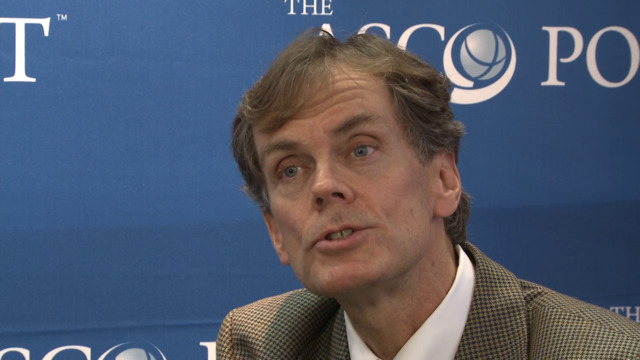
Sagar Lonial, MD
Sagar Lonial, MD, of Winship Cancer Institute, offers his thoughts on abstract 79, “Carfilzomib, Lenalidomide, and Dexamethasone vs Lenalidomide and Dexamethasone in Patients With Relapsed Multiple Myeloma: Interim Results From ASPIRE, a Randomized, Open-Label, Multicenter Phase III Study,” presented by A. Keith Stewart, MD.
Julie M. Vose, MD, MBA, FASCO
Julie M. Vose, MD, MBA, FASCO, of the University of Nebraska Medical Center, offers her thoughts on abstract 289, “Nivolumab in Patients With Relapsed or Refractory Hodgkin Lymphoma: Preliminary Safety, Efficacy, and Biomarker Results of a Phase I Study,” presented by Philippe Armand, MD, PhD.
Hagop Kantarjian, MD
Hagop Kantarjian, MD, of The University of Texas MD Anderson Cancer Center, offers his thoughts on abstract 380, “T Cells Engineered with a Chimeric Antigen Receptor (CAR)-Targeting CD19 (CTL019) Have Long Term Persistence and Induce Durable Remissions in Children With Relapsed, Refractory ALL,” presented by Stephan A. Grupp, MD, PhD; abstract 381, “Intent-to-Treat Results of a Phase I Trial of CD19 Chimeric Antigen Receptor Engineered T Cells Using a Consistent Treatment Regimen Reveals a 67% Complete Response Rate in Relapsed, Refractory Acute Lymphoblastic Leukemia,” presented by Daniel W. Lee III, MD; and abstract 382, “CD19-Targeted 19-28z CAR Modified Autologous T Cells Induce High Rates of Complete Remission and Durable Responses in Adult Patients With Relapsed, Refractory B-Cell ALL,” presented by Jae H. Park, MD.