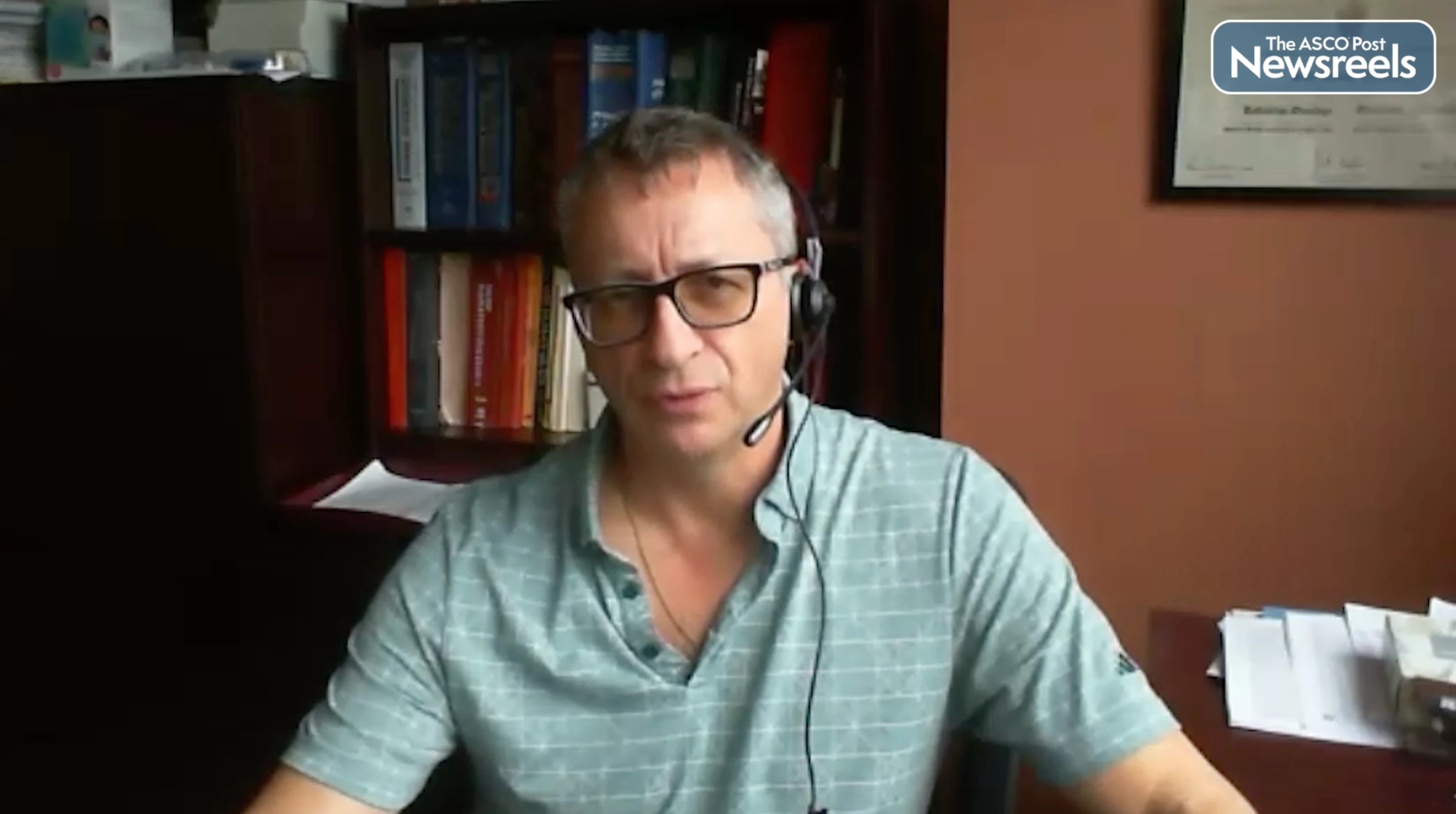
Enrique Gallardo, MD, on mCRPC: Enzalutamide With or Without Radium-223
2026 ASCO GU
Enrique Gallardo, MD, of Parc Taulí University Hospital, presents final overall survival results from the EORTC 1333/PEACE-3 trial, which is a phase III trial evaluating the addition of radium-223 to enzalutamide in patients with metastatic castration-resistant prostate cancer (mCRPC) and bone metastases. Earlier data from the trial showed that the combination prolonged both radiographic progression–free and overall survival; the new data include a final overall survival analysis and updated safety results (Abstract 15).
The ASCO Post Staff
Anna Clare Wilkins, PhD, MRCP, MBBChir, of The Institute of Cancer Research, discusses the external validation of a digital pathology-based multimodal artificial intelligence (MMAI)-derived prognostic biomarker using data from the phase III CHHiP trial. CHHiP evaluated conventional vs hypofractionated high-dose intensity-modulated radiotherapy for patients with localized prostate cancer (Abstract 308).
The ASCO Post Staff
Thomas Powles, MD, PhD, FCRP, of Barts Cancer Centre, Queen Mary University of London, shares findings from the phase II RC48G001 trial of disitamab vedotin, an antibody-drug conjugate comprising a novel anti-HER2 antibody, disitamab, and an MMAE payload. The agent demonstrated “promising antitumor activity and a manageable safety profile, consistent with results from China, supporting further evaluation,” concluded investigators (Abstract LBA631).
The ASCO Post Staff
Amar Kishan, MD, University of California, Los Angeles, discusses results from an individual patient data meta-analysis of randomized trials to quantify the benefit of adding hormone therapy to postoperative radiotherapy in patients with localized prostate cancer after radical prostatectomy (Abstract 305).
Click here to read The Lancet publication.
The ASCO Post Staff
Matthew D. Galsky, MD, FASCO, of Mount Sinai Tisch Cancer Center, discusses findings from the randomized phase III KEYNOTE-B15/EV-304 study, which is evaluating neoadjuvant and adjuvant enfortumab vedotin plus pembrolizumab followed by radical cystectomy plus pelvic lymph node dissection vs neoadjuvant chemotherapy followed by radical cystectomy plus pelvic lymph node dissection in patients with muscle-invasive bladder cancer who are eligible for cisplatin-based therapy (Abstract LBA630).
The ASCO Post Staff
Scott Tyldesley, MD, FRCPC, of BC Cancer Vancouver, reports on the 15-year survival analysis from the ASCENDE-RT trial, which randomly assigned patients to receive either prostate brachytherapy or the external-beam radiotherapy boost; both arms also received androgen-deprivation therapy. Fifteen-year overall survival and cumulative risk of death from prostate cancer were analyzed (Abstract 306).