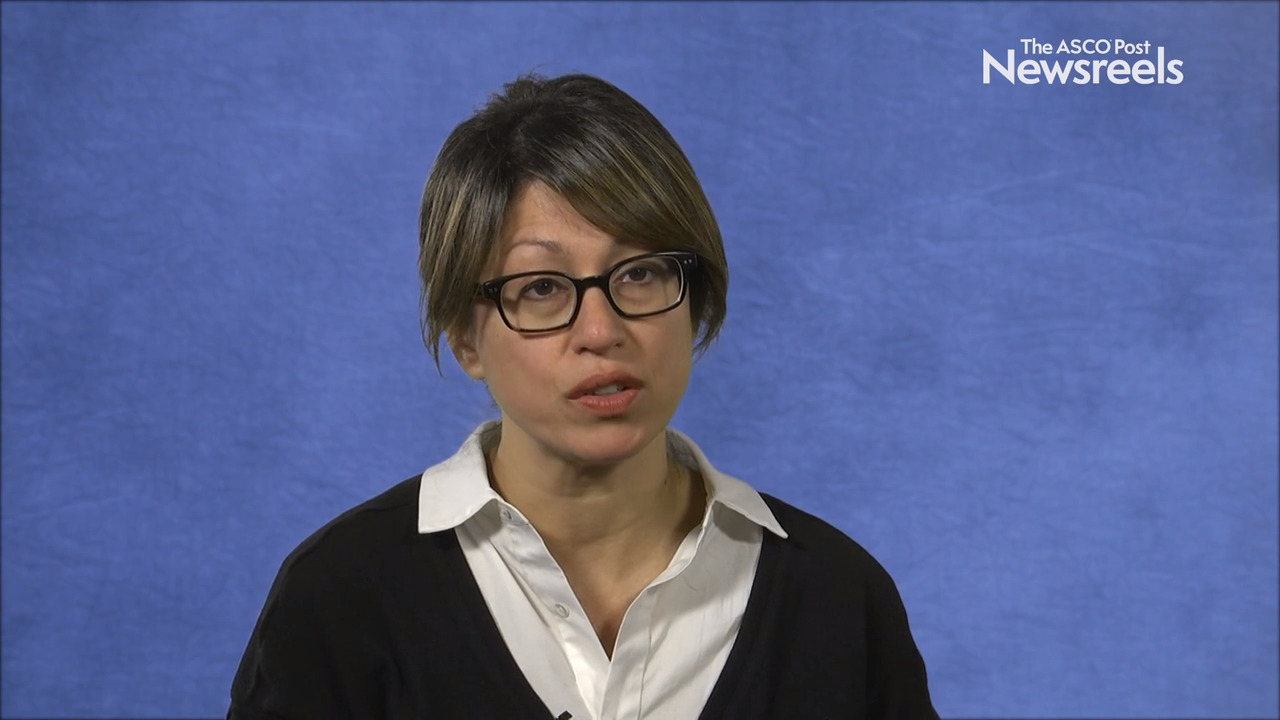
Hope S. Rugo, MD, on Immunotherapy for Breast Cancer: Expert Perspective
2018 San Antonio Breast Cancer Symposium
Hope S. Rugo, MD, of the University of California, San Francisco, summarizes a spotlight session she chaired, which included discussion of new immunotherapy drug combinations, predictive factors, and the immune microenvironment.
Allison Magnuson, DO, of the University of Rochester Strong Memorial Hospital, discusses the development of a chemotherapy toxicity risk score that is associated with dose reduction as well as reduced respiratory distress and fewer hospitalizations (Abstract GS6-04).
Reshma Jagsi, MD, DPhil, of the University of Michigan, and Rachel A. Freedman, MD, MPH, of Dana-Farber Cancer Institute, discuss the twin challenges of overtreating people with cancer and the missed opportunities and dangers of undertreatment.
Shoichiro Ohtani, MD, PhD, of Hiroshima City Hiroshima Citizens Hospital, discusses study findings on extending anastrozole to 10 years, which led to higher rates of disease-free survival and distant disease–free survival (Abstract GS3-04).
Kathy S. Albain, MD, of Loyola University Stritch School of Medicine, discusses study findings on race, ethnicity, and patient outcomes in hormone receptor–positive, HER2-negative, node-negative breast cancer (Abstract GS4-07).
Shanu Modi, MD, of Memorial Sloan Kettering Cancer Center, discusses study findings from a large phase I study on trastuzumab deruxtecan in patients with low HER2-expressing breast cancer (Abstract P6-17-02).