
After finishing her academic studies, Dr. Mittendorf enlisted in the U.S. Air Force—an experience that would propel her into the field of oncology.
“My second day on active duty was September 11, 2001,” said Dr. Mittendorf. “I was an attending surgeon at Walter Reed Army Medical Center (now called Walter Reed National Military Medical Center) where I cared for the returning wounded soldiers from Operation Enduring Freedom, and where I also staffed the breast clinic. There I met a patient whose breast cancer had recurred 15 years after her initial diagnosis, and I remember being so struck by the thought that her immune system had failed her.”
That curiosity led Dr. Mittendorf to the cancer vaccine laboratory of Col. George Peoples, MD, FACS, then Chief of Surgical Oncology at Walter Reed. “The experience of caring for the woman with recurrent disease piqued my interest in breast cancer, and having Dr. Peoples as a mentor and role model piqued my interest in doing a fellowship in surgical oncology,” said Dr. Mittendorf.
The combination of being in the military and working in a research laboratory taught Dr. Mittendorf the importance of teamwork and the collaborative effort that goes into achieving a common goal.
“The Air Force is a good example where being part of a team is emphasized. When I think about medicine, I can’t imagine a field that values the team approach more than oncology,” explained Dr. Mittendorf.
It’s that focus on the importance of a team approach to reaching both individual and organizational goals that drove Dr. Mittendorf to choose as her Presidential theme “Intentional Teams, Exceptional Care.” Her term as ASCO President will take effect during the 2026 ASCO Annual Meeting, May 29-June 2, 2026, in Chicago.
“Both my personal and professional life have been defined by being part of a team. As a surgical oncologist, I’ve seen firsthand that when a team is working together and highly functional, the care we provide our patients is exceptional. The result is high-quality care and excellent oncologic outcomes. Our patients are happier, as are the members of our team. Being part of a collaborative team prevents clinician burnout,” said Dr. Mittendorf. “The word ‘Care’ in my Presidential theme has a double meaning for me in that it refers to not only providing exceptional care for our patients, but ensuring exceptional care for our teams as well, so that everyone enjoys their work and has professional fulfillment. Over the coming year, I hope to remind our community that exceptional patient care starts with a culture in which we take care of ourselves and our team members.”
Living a Life of Service
After finishing her military service, Dr. Mittendorf completed a fellowship in surgical oncology. She joined the faculty at The University of Texas MD Anderson Cancer Center, and earned a doctorate in immunology at The University of Texas Graduate School of Biomedical Sciences in Houston. After moving to Boston several years later, Dr. Mittendorf received a Master of Healthcare Management from the Harvard T.H. Chan School of Public Health.
She is currently serving in an array of professional capacities, including Chief, Division of Breast Surgery at Beth Israel Deaconess Medical Center; Chief, Multidisciplinary Oncology at Dana-Farber Cancer Institute; and Co-Leader, Breast Cancer Program at Harvard Cancer Consortium.
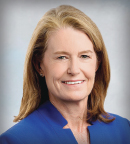
Elizabeth A. Mittendorf, MD, PhD, MHCM, FASCO
Dr. Mittendorfis recognized for her expertise in the treatment of breast cancer and as an innovator in the use of immunotherapy in the treatment of both early-stage and metastatic triple-negative breast cancer. She has been recognized for her work in these areas with the ASCO Foundation Merit Award, ASCO Breast Cancer Symposium Excellence in Clinical Research Award, and as a Susan G. Komen Scholar (2017-2026), among other accolades.
An ASCO volunteer for more than 15 years, Dr. Mittendorf has served the Society in a variety of roles, including as a member of the Board of Directors (2019-2023); Society Treasurer (2022-2023); Past Chair of the Conquer Cancer Grants and Awards Selection Committee; and Past Member of the Annual Meeting Scientific Program Committee and the Best of ASCO Planning Committee.
In this wide-ranging interview with The ASCO Post, Dr. Mittendorf discussed her goals and the potential challenges she may face during her Presidential tenure, the impact of federal budget reductions to the National Cancer Institute, and how ASCO’s Regional Councils are developing programs and services to address regional concerns.
Supporting Exceptional Care Teams
Your Presidential theme is “Intentional Teams, Exceptional Care.” How does your theme fit into the priorities and goals you hope to accomplish during your tenure as ASCO President?
I’m still working on the specifics of what I will focus my efforts on during my Presidential year, but they will be consistent with the spirt of my Presidential theme.
As a surgical oncologist, I view cancer through a multidisciplinary lens. So, an overarching focus for me is going to be championing a community that affects the entire care team, including surgical, medical, and radiation oncologists; advanced practitioners; nurses; genetic counselors; pharmacists; and physical and occupational therapists; among others.
In the big picture, my Presidential theme can apply to a number of areas, such as supporting exceptional care teams in every setting, confronting the urgent issues that face our profession, and investing in the next generation of the oncology workforce. It can also apply to how we integrate artificial intelligence (AI) and digital health into our care team.
One opportunity for me will be to spend a lot of time and effort learning about AI’s impact on oncology and helping our members understand how best to incorporate the technology into their practices.
Assessing the Impact of AI on Oncology
What are some of the greatest challenges you anticipate during your Presidential year?
I’m generally an optimistic person and choose to view challenges as opportunities. Broadly, I would say the greatest challenge is going to be helping to lead ASCO during a time of such rapid changes across the field of oncology. Many of these changes are very positive, for example in the scientific breakthroughs where we are making so much progress in the prevention, early detection, and treatment of cancer. Now we make these breakthroughs available to more patients.
As I mentioned earlier, we need to assess what impact the rapid deployment of AI in oncology both in enhancing efficiency and informing treatment decision-making will have on oncology practices. We will also be dealing with issues confronting ASCO regarding our policy and advocacy efforts in an environment that is changing so quickly.
I hope that my surgical training will be helpful to me in these challenging times, because as a surgeon you are used to synthesizing data, even incomplete data, and making decisions quickly, and that my professional skill set will serve ASCO and its members well.
Overcoming Challenges
Research has been among your primary interests. In 2025, President Trump’s budget proposal called for unprecedented cuts to the National Cancer Institute’s (NCI’s) budget, with proposed fiscal year (FY) 2026 budget cuts reaching nearly $2.7 billion, a 37% decrease from FY 2025.1
Research is among the tenets of ASCO’s mission: “Conquering cancer through research, education, and promotion of the highest quality patient care.” What impact will these funding cuts to the NCI have on continuing cancer advancements, on patient care, and on fulfilling ASCO’s mission to conquer cancer?
First and foremost, we know that federal funding has propelled cancer research forward. It’s federal funding that has led to so many breakthroughs in cancer treatment and brought us closer to more cures. Currently, there are nearly 19 million cancer survivors in the United States—and that number is projected to increase to 22 million by 2035.2 For decades, the federal government has been the largest funder of cancer research, which has resulted in so many lives saved. As a society, we’ve had a tremendous return on that investment.
The word ‘Care’ in my Presidential theme has a double meaning for me in that it refers to not only providing exceptional care for our patients, but ensuring exceptional care for our teams as well, so that everyone enjoys their work and has professional fulfillment.— ELIZABETH A. MITTENDORF, MD, PhD, MHCM, FASCO
Tweet this quote
Like others, I’m concerned that changes to our funding model could erode our research ecosystem, which could threaten our role as a global leader in medical research and innovation. I’m also concerned the effect of these budget cuts can result in stalling the training of young investigators and clinicians and cause the scientific “brain drain” that we’ve been hearing about.
What is encouraging to me is that whereas the administration proposed a significant cut to the National Institutes of Health and the NCI budgets, Congress ultimately voted to reject those cuts and instead increased funding for NCI by $128 million.3 This reminds me that cancer research to improve cancer treatment, screening for cancer, and prevention for cancer is not a partisan issue. My hope is that Congress will continue to work in a bipartisan way to support cancer research.
In my role as ASCO President, it makes me even more proud of the commitment the organization has made to funding young investigators through our Young Investigator Award (www.asco.org/career-development/grants-awards/funding-opportunities/young-investigator-award) and the Career Development Award (www.asco.org/career-development/grants-awards/funding-opportunities/career-development-award) programs. Conquer Cancer, The ASCO Foundation (https://www.conquer.org) does a tremendous job of identifying young investigators who are doing impactful work, and to date, we have generated enough resources to support all the work we think is meritorious. The work of the foundation is even more important in this current environment.
Extending Support Worldwide
Nearly one-half of ASCO members practice outside of the United States, and one-quarter practice in low- and middle-income countries. Three years ago, ASCO expanded free membership to physicians from low-resource countries. What has been the response so far?
We’ve had a tremendous response to this program. We’ve seen a large number of oncology professionals at all career stages from low- and middle-income countries join our ASCO community.
Making ASCO membership and resources more accessible globally is among the ways ASCO’s 2025-2026 President Eric J. Small, MD, FASCO, is advancing his presidential vision. What he recognizes, and what ASCO more broadly recognizes, is that by extending our reach globally beyond Western Europe, this program is helping to drive bidirectional learning. For example, ASCO has put resources into supporting regional research and collaborating on tools, including our clinical guidelines, with the hope that local solutions as a result of this support are then shared globally to maximize our impact.
Achieving Global Impact Locally
ASCO has expanded its outreach in the global community, including the launch of four Regional Councils in Asia-Pacific, Latin America, Central and Eastern Europe, and sub-Saharan Africa. What progress are you seeing in these regions, and are there plans to increase the number of ASCO Regional Councils in the future?
The Regional Councils program is an idea that was born during an ASCO Board retreat several years ago, during which we discussed how we wanted to prioritize our resources. The decision by our Board members was that we wanted to further our global impact, and these four Regional Councils are doing incredible work to tailor ASCO programs to their local needs.
What is important about this program is that we don’t tell these Councils how to conduct their research or clinical practices. We rely on them to help ASCO identify the needs and challenges these members face in their respective regions.
I’ll give you a couple of examples. The Asia-Pacific Regional Council has a professional development program called International Clinical Research Scholars, which is focused on building clinical research capacity within the region. The course is designed to provide selected scholars with training, mentorship, and resources to conduct high-quality international clinical research with the goal of developing the next generation of oncology research leaders in the Asia-Pacific region. The course consists of both in-person workshop clinical research training and monthly virtual sessions with an ASCO mentor to support their training.
And the Sub-Saharan Africa Regional Council recently launched an African Community of Practice on ASCO’s online community platform with the goal of fostering collaboration and resource sharing across Africa. This is a community that is being led by regional champions in Kenya, Egypt, Rwanda, and Zambia.
The ASCO Board members are constantly surveying the results of the Regional Councils, and considering whether to expand the program.
Dr. Mittendorf began her 4-year ASCO Presidential term in June 2025 as President-Elect. She will become Chair of the Board in 2027, during the third year of her term, followed by her fourth year as Past President.
DISCLOSURE: Dr. Mittendorf is a consultant for aLight Sciences, AstraZeneca, and Merck. Her institution receives research funding from Roche/Genetech and Gilead.
REFERENCES
1. American Cancer Society Cancer Action Network: Future cancer cures in jeopardy as president proposes massive cuts to National Cancer Institute. Available at www.fightcancer.org/releases/future-cancer-cures-jeopardy-president-proposes-massive-cuts-national-cancer-institute#:~:text=Cuts%20could%20cost%20United%20States,Action%20Network%20ACS%20CAN. Accessed May 5, 2026.
2. American Cancer Society: New ACS study: Number of cancer survivors in the U.S. reaches 18.6 million—Projected to exceed 22 million by 2025. Available at https://pressroom.cancer.org/Cancer-Survivors-Increase. Accessed May 5, 2026.
3. Kaiser J: Final funding bill for NIH pushes back against Trump Cuts. Science, January 20, 2026. Available at www.science.org/content/article/final-funding-bill-nih-pushes-back-against-trump-cuts#:~:text=The%20final%20bipartisan%20funding%20package%20for%20the,costs%20and%20infrastructure%20needed%20to%20support%20research. Accessed May 5, 2026.
