
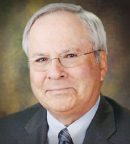
Gary R. Morrow, PhD, MS
Gary R. Morrow, PhD, MS, died on July 7, 2026, at age 82, from complications due to pneumonia and a 16-year history of prostate cancer, according to an obituary shared by his family.
Over nearly 5 decades at the University of Rochester Wilmot Cancer Institute, Dr. Morrow brought in $100 million in funding, with results that made a lasting impact for cancer research and for the future of cancer care. He built the University of Rochester Cancer Center National Cancer Institute Community Oncology Research Program (URCC NCORP), a nationwide network dedicated to bringing high-quality cancer control and supportive care research directly to patients in their communities. He also established the Cancer Control Research Training Program at the University, which has been continually funded since 2004.
Longtime colleagues and friends say Dr. Morrow was an excellent communicator who put the patient experience first, long before the field of medicine coined the phrase “patient-centered care.”
“He spoke truth to power,” said David Linehan, MD, CEO of University of Rochester Medicine and Dean of the School of Medicine and Dentistry. Prior to becoming CEO, Dr. Linehan was the Seymour I. Schwartz Professor and Chair of Surgery, which was Dr. Morrow’s faculty home. They worked together for years to improve research at Wilmot.
“Gary was very demanding in a good sense,” Dr. Linehan said. “He was always fighting for what he believed in.”
“Gary’s commitment to supporting the next generation of investigators, what he termed his ‘grasshoppers,’ has resulted in an outstanding legacy,” said Jonathan W. Friedberg, MD, MMSc, Director of Wilmot Cancer Institute. “Many of Dr. Morrow’s trainees are now recognized as leaders in supportive oncology care, including Karen Mustian, MD, Associate Director for Population Sciences at Wilmot; Supriya Mohile, MD, Vice Chair, Department of Medicine and Program Leader, Cancer Prevention and Control; Charles Kamen, MD, Assistant Director of Community Outreach and Engagement at Wilmot; and Michelle Janelsins, MD, who holds the Joan and Gary Morrow Distinguished Professorship for Supportive Care in Cancer.”
Background and Notable Achievements
Dr. Morrow was born on March 4, 1944 to J. Robert Morrow, MD, and Frances (Pertes) Morrow, in Geneva, New York. He received his undergraduate degrees in English and Mechanical Engineering from the University of Notre Dame, and he remained a loyal Fighting Irish fan throughout his career. He went on to earn Master’s and Doctoral degrees in Clinical Psychology from the University of Rhode Island, and later a Master’s degree in Medical Statistics from the University of Rochester. Dr. Morrow also proudly served in the U.S. Navy for 4 years as a submarine officer.
The son of a locally prominent surgeon, Dr. J. Robert Morrow, who worked at Geneva General Hospital, Dr. Morrow thrived following the passage of the National Cancer Act in 1971 and the nation’s first so-called “war on cancer.”
In a series of high-profile studies in the 1980s, Dr. Morrow defined the clinical characteristics of cancer-related nausea and vomiting and established anticipatory nausea as a major barrier to completing cancer treatment. His goal was to help patients finish their prescribed therapies to improve their chances of remission or cure.
He also pursued anxiety and expectations around nausea and how to measure it; the role of susceptibility to motion sickness and management of that condition; and the evaluation in clinical trials of non-drug treatments such as deep relaxation and behavioral therapy, ginger supplements, and wristbands to control nausea. His studies were published in the New England Journal of Medicine and the Journal of the American Medical Association, among other peer-reviewed journals. The findings on prevention and behavioral therapy led to changes in clinical practice.
Later, Dr. Morrow turned toward investigating medications to manage chemotherapy side effects. In 1999, Morrow was among the 15 expert panelists convened by ASCO to report the nation’s first-ever evidenced-based recommendations for the use of anti-nausea and anti-vomiting drugs, in a seminal article in the Journal of Clinical Oncology.
“Gary Morrow, trained in clinical psychology, understood the human side of cancer, and dedicated his career to what he would say was ‘helping good people through lousy times.’ His insight into human behavior, passion for making rigorous science practical and relatable, and sense of humor all contributed to his knack for designing and conducting symptom management clinical trials in the community setting,” said Lori Minasian, MD, FACP, Deputy Director for the Division of Cancer Prevention at the National Cancer Institute.
A Live Well Lived
Dr. Morrow lived with prostate cancer for 16 years and ended up benefiting from his own studies and those of his protégés.
He exercised as long as possible, making regular appearances in Wilmot’s PEAK Human Performance Exercise Oncology Lab founded by his mentee Dr. Mustian. He also followed the recommendations of another mentee, Dr. Mohile, who founded the Geriatric Oncology Program at Wilmot with his guidance.
“I never turn down a good idea,” Dr. Morrow said, in an interview in 2019. “I believe in what my people are doing.”
Under Dr. Morrow’s guidance and leadership, Wilmot’s cancer control research has become a national model, continuously funded by the NCI for more than 45 years.
Years ago, when Dr. Morrow was asked to reflect on how it feels to know that his work helped so many people, he said: “Anybody who gets into research looking for accolades probably belongs someplace else. We are terminally curious people and want to know how things work and how we can make things better. Treatment of cancer is not a walk in the park—and to know that you’re making things better is a great way to spend your day.”
Dr. Morrow is survived by his wife of 59 years, Joan “Poss” (Baumgartner); his children: Andrew Robert (Claudia), James Frederick (Darsa), and Jennifer Rebecca; his grandchildren: Caleb, Zoe, Max, Theodore, and Hatcher Morrow, and Jack and Luke DesRosiers; his brother, Douglas (Janice), and four nieces.
Adapted with permission from the University of Rochester Medicine. To view the full tribute, visit bit.ly/4zs2qMJ
