
I have had many idols in medicine. Many eventually let me down.
Claudia Henschke, PhD, MD, Professor of Radiology and Head of the Lung and Cardiac Screening Program at Mount Sinai Medical Center in New York City, an expert in diagnostic radiology, and a pioneer in computed tomography (CT) screening for early lung cancer, never let me down.
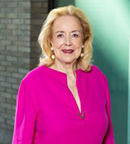
Claudia Henschke, PhD, MD
Claudia’s story was improbable long before lung cancer screening made her famous. Born in Berlin, she came to the United States as a little girl and grew up in Forest Hills, Queens. She became an elite amateur tennis player, ranked No. 2 in the East in singles and, with her partner, No. 1 in doubles. Maureen Connolly, the first woman to win the tennis Grand Slam, told Claudia she could become the best player in the world if she devoted herself entirely to the sport.
Claudia chose statistics. She studied mathematics and earned a PhD in mathematical statistics and computer science. Along the way, she became a commercially licensed pilot. While living in Texas, she flew passengers, including physicist Edward Teller.
Then she decided to become a physician. In 1974, she entered Howard University College of Medicine, where she was the only White woman in her class. She went on to complete her radiology residency at Harvard Medical School, Mass General, and Brigham and Women’s Hospital.
She eventually became a chest radiologist and began asking a question that medicine had largely given up asking: Could we find lung cancer early enough to cure it?
In 1992, Claudia began what would become the Early Lung Cancer Action Project (ELCAP). The initial results, published in 0 in 1999, showed that low-dose CT detected substantially more early lung cancers than chest radiography. The findings made the front page of The New York Times on July 9, 1999, under the headline “CAT Scan Process Could Cut Deaths From Lung Cancer.”
Claudia had started a national argument.
I entered that argument a year later.
I first met Claudia in 2000 at Memorial Sloan Kettering Cancer Center, where I was an attending thoracic surgeon. She was debating Dr. Peter Bach, a highly respected pulmonologist and my colleague at the time, about whether CT screening could save lives from lung cancer. Dr. Bach had published work in The New England Journal of Medicine examining racial disparities in the treatment of early-stage lung cancer. Black patients underwent potentially curative surgery less often than White patients and had worse survival outcomes. But among those Black patients who did undergo surgery, survival outcomes were similar to White patients who underwent surgery.
As I listened to the debate, it struck me that his own data supported the argument Claudia was making. The early opportunity for cure mattered. So I stood up from the back of the room and questioned him.
I remember looking at Claudia. Her eyes lit up. Afterward, she came up to me and told me how much she loved my exchange with Peter. That was how Claudia Henschke and I met.
Looking back, I cannot imagine a more appropriate beginning to our friendship. She was trying to find patients in time. I was trying to cure them once she did.
Finding Cancer Earlier
Claudia kept building the evidence. In 2006, the International Early Lung Cancer Action Program (I-ELCAP) reported in The New England Journal of Medicine that among 31,567 people initially screened, 484 lung cancers were diagnosed; 85% were clinical stage I. The estimated 10-year lung cancer–specific survival among patients with stage I disease was 88%. Among those who underwent prompt surgical resection, it was 92%.
The implication was provocative. Lung cancer, a disease generations of physicians had come to regard almost fatalistically, might be curable in the overwhelming majority of patients if we could simply find it soon enough. There were legitimate scientific questions. Survival after diagnosis is not the same as demonstrating a reduction in mortality in a randomized trial. Critics raised concerns about lead-time bias, length bias, and overdiagnosis. Those were questions science needed to answer.
Eventually, it did. The National Cancer Institute launched the National Lung Screening Trial in 2002. More than 53,000 high-risk people were randomized to low-dose CT or chest radiography. This was the randomized mortality trial the field had demanded.
And CT screening worked. Low-dose CT screening reduced lung cancer mortality vs chest radiography.
After years of debate over whether the observations from CT screening could be misleading, a randomized trial demonstrated the central proposition Claudia had spent her career pursuing: find lung cancer early, while it is still curable, and fewer people die from it.
Low-dose CT screening ultimately became standard medical practice. But Claudia kept going. So did David Yankelevitz, MD, a Professor of Radiology and the Director of the Lung Biopsy Service at the Icahn School of Medicine at Mount Sinai. It is difficult to tell Claudia’s scientific story without David. He was her scientific partner and her partner in life. She was a German immigrant who had come to Queens as a little girl. He was a Jewish kid from Brooklyn. Only in America.
Somehow, these two people from very different worlds found each other in New York and spent decades together trying to change the way we understand lung cancer. Together, they studied the behavior of early-stage lung cancers—how they grow, how they change, and how imaging could distinguish cancers that required treatment from abnormalities that could safely be watched. They challenged each other. They challenged conventional thinking. And they kept asking questions.
Over the years, I went from being the surgeon in the audience who caught Claudia’s attention by arguing her case to becoming her colleague, collaborator, and friend when we both moved to Mount Sinai in 2010. I had spent a decade as a thoracic surgeon at Memorial Sloan Kettering Cancer Center, one of the great cancer centers in the world. Yet I learned more from Claudia and David about the biology of stage I lung cancer than I had learned in all those years. They changed the way I thought about the disease.
Claudia Is Arguing About Time
Eventually I came to understand something fundamental about Claudia. She isn’t really arguing about CT scans. She is arguing about time. Cancer is a biological clock. There is a period when a cancer is confined, when surgery or another local treatment can still eradicate it. Then there is a point when it escapes. Sometimes that window lasts years. Sometimes it is frighteningly short.
Claudia built her career around trying to find patients on the right side of that line.
More than 2 decades after the original ELCAP work, we published the long-term follow-up of patients diagnosed through annual CT screening. Among 1,257 people diagnosed with lung cancer, lung cancer–specific survival at 20 years was 81%. Among patients with pathologic T1aN0M0 tumors 10 mm or smaller, it was 95%. This time, I was one of the authors.
I sometimes thought about that auditorium in 2000. I had gone from watching Claudia defend her ideas from the audience to putting my name alongside hers on the evidence she had spent a lifetime building.
The Claudia I Know
But the numbers do not adequately explain why Claudia became so important to me. There is another Claudia who does not appear in survival curves or scientific papers. She is surprisingly loving. People who know only the public Claudia—the relentless scientist and mathematician who could keep arguing a point long after everyone else in the room was exhausted—might never guess how warm she can be.
Claudia has never had children of her own. But she has a family. It is her team. She has always treated the people who work with her as though they belong to her. She worries about them. She protects them. She pushes them. She celebrates their successes. She can be extraordinarily motherly. And people stay with her.
That tells you something about a person that a curriculum vitae never can. The public Claudia can be formidable. The private Claudia can be remarkably tender.
Medicine is filled with people we admire from a distance. We read their papers. We hear them lecture. We construct an image of them in our minds. Then we meet them. Sometimes we work with them. And sometimes the closer we get, the more disappointing they become. Ego appears. Ambition appears. The mythology disappears. Claudia is different. The closer I have gotten to her, the more I have admired her.
That does not mean she is always right. Science does not work that way. The questions raised about early CT screening were important questions. But I never doubted what Claudia is trying to accomplish. She wants to cure lung cancer. And she believes one of the most powerful weapons we had was time. For more than 25 years, I have watched her make that argument.
Now, I am watching something I never imagined. Claudia developed endometrial cancer.
As I write this, Claudia is dying in an intensive care unit from a cancer that had not been found early enough.
There is a cruelty to that which is difficult for me to put into words.
The woman who spent her life teaching us that timing matters in cancer is now running out of time herself. The scientist who devoted her career to finding cancer before it could spread developed a cancer that was not found soon enough. And the surgeon who first met her by standing up in the back of an auditorium and arguing that the early opportunity for cure mattered can do nothing to save her.
There are no statistics that make that easier. No Kaplan-Meier curve. No debate. No P value. Just Claudia.
I have had many idols in medicine. Over the years, many of them eventually disappointed me. Claudia Henschke never has. Twenty-six years after I first saw her eyes light up in that auditorium, I believe in what she is fighting for more than ever. She has spent her career trying to find lung cancer early, in time to offer a chance for cure.
I only wish that medicine could have found her cancer sooner. So that Claudia, too, could have a chance for cure.
Raja M. Flores, MD, is Chairman for the Department of Thoracic Surgery and the Steven and Ann Ames Professor in Thoracic Surgery at the Mount Sinai Health System in New York City.
