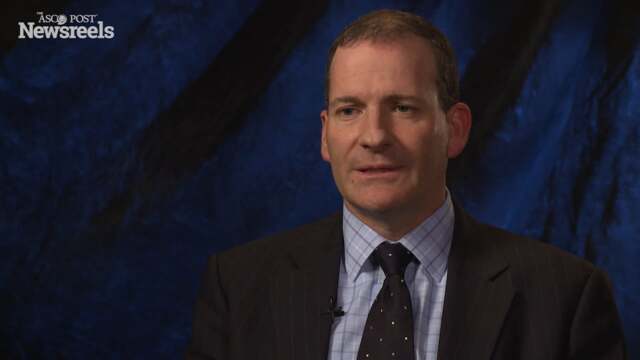
Paul L. Nguyen, MD, on Prostate Cancer: Results of the NRG Oncology/RTOG 9601 Study
2016 Genitourinary Cancers Symposium
Paul L. Nguyen, MD, of Dana-Farber Cancer Institute, discusses this phase III trial in which prostate cancer patients were given antiandrogen therapy with bicalutamide during and after salvage radiation therapy following radical prostatectomy and an elevated PSA (Abstract 3).
Srikala S. Sridhar, MD
Srikala S. Sridhar, MD, of the Princess Margaret Cancer Centre, summarizes important papers presented on bladder and urothelial cancers, including perspectives on immunotherapies and radiotherapies.
Bernard J. Escudier, MD
Bernard J. Escudier, MD, of the Institut Gustave Roussy, discusses a subgroup analyses of this phase III study of cabozantinib vs everolimus in patients with advanced renal cell carcinoma (Abstract 499). To see the French language version of this video, click here.
Fred Saad, MD
Fred Saad, MD, of the University of Montreal, summarizes in French his session on the latest treatment developments in prostate cancer, including the role of chemotherapy in hormone-sensitive disease.
Matthew Smith, MD, PhD
Matthew Smith, MD, PhD, of the Massachusetts General Hospital Cancer Center, discusses the best use of approved therapies for tumors that have spread to the bone.
Christopher J. Sweeney, MBBS
Christopher J. Sweeney, MBBS, of the Dana-Farber Cancer Institute, reviews important presentations on testicular cancer, including dose intensification for first-line therapy of metastatic disease, and what physicians need to know about the molecular genetics of testicular cancer.