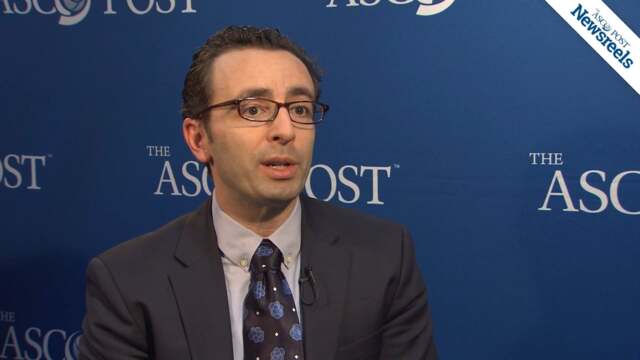
Laurie H. Sehn, MD, MPH, on Follicular Lymphoma: Choosing the Best Target
2016 ASH Annual Meeting & Exposition
Laurie H. Sehn, MD, MPH, of the British Columbia Cancer Agency, discusses agents in the pipeline for follicular lymphoma, including drugs targeting the immune microenvironment, novel monoclonal antibodies, and emerging immunotherapeutics.
Catherine Thieblemont, MD, PhD, of Hôpital Saint-Louis and INSERM, discusses in French phase III trial findings on lenalidomide maintenance in elderly patients with DLBCL treated with R-CHOP in the first-line setting (Abstract 471).
Syed A. Abutalib, MD, of Cancer Treatment Centers of America, and Nelli Bejanyan, MD, of the University of Minnesota, discuss findings from a study conducted by the Center for International Blood and Marrow Transplant Research on treatment for ALL patients, with an available donor, undergoing myeloablative allogeneic hematopoietic cell transplantation in first complete remission (Abstract 684).
Robert E. Marcus, MD, of Kings College Hospital, discusses study findings on obinutuzumab-based induction and maintenance in patients with previously untreated disease (Abstract 6).
Brenda M. Sandmaier, MD, of Fred Hutchinson Cancer Research Center, and Sagar Lonial, MD, of Emory University, discuss study findings on sirolimus combined with mycophenolate mofetil and cyclosporine to improve prevention of acute graft-vs-host-disease after unrelated hematopoietic cell transplantation (Abstract 506).
Joshua Brody, MD, of the Icahn School of Medicine at Mount Sinai, summarizes important data on passive and active immunotherapy (Abstracts 1213, 1214, 1215, 1216, 1217, 1218).