Jean M. Connors, MD, and Julie Vose, MD, MBA, on Thrombosis and Anticoagulation: Best of ASH Clinical Data
2016 ASH Annual Meeting & Exposition
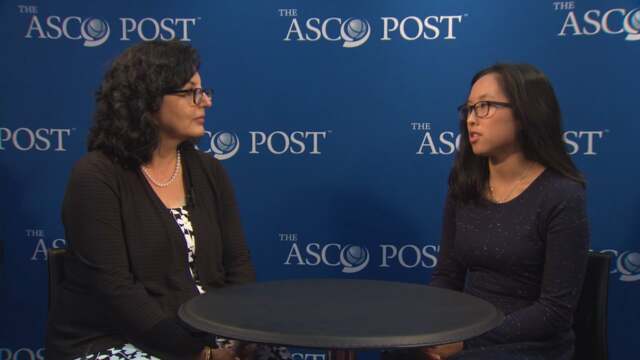
Jean M. Connors, MD, of Brigham and Women’s Hospital, and Julie Vose, MD, MBA, of the University of Nebraska Medical Center, discuss a roundup of key findings on a critical area in the treatment of hematologic malignancies (Abstracts 17, 85, 86, 135, 139, 143, 273, 415, 419, 719, 877, 880).
Robert E. Marcus, MD, of Kings College Hospital, discusses study findings on obinutuzumab-based induction and maintenance in patients with previously untreated disease (Abstract 6).
Smita Bhatia, MD, MPH, and Jessica Wu, BA, both of the University of Alabama at Birmingham, discuss long-term morbidity and mortality experienced by chronic myeloid leukemia patients after allogeneic hematopoietic cell transplantation (Abstract 823).
Stephen M. Ansell, MD, PhD, of the Mayo Clinic, discusses phase I study findings on nivolumab in combination with ipilimumab for relapsed or refractory disease (Abstract 183).
Harry P. Erba, MD, PhD, of the University of Alabama at Birmingham, discusses phase Ib findings on vadastuximab talirine in combination with 7+3 induction therapy for patients with newly diagnosed AML (Abstract 211).
Martin Schrappe, MD, of Christian-Albrechts University Kiel, discusses in German study findings on reduced intensity delayed intensification in standard-risk patients defined by minimal residual disease in childhood acute lymphoblastic leukemia (Abstract 4).