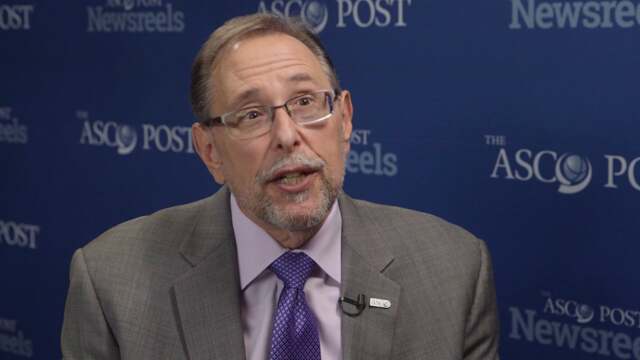
Julie R. Park, MD, on Neuroblastoma: Results of a Children’s Oncology Group Study
2016 ASCO Annual Meeting
Julie R. Park, MD, of Seattle Children’s Hospital, discusses findings from this phase III trial of tandem myeloablative autologous stem cell transplant using peripheral blood stem cell as consolidation therapy for high-risk neuroblastoma (Abstract LBA3).
Michele Cavo, MD, of the Seràgnoli Institute of Hematology, Bologna University School of Medicine, discusses results from this phase III study of upfront autologous stem cell transplantation vs novel agent-based therapy for multiple myeloma (Abstract 8000). To see the Italian version of this interview, please click here.
Maria Clemence Schwaederle, PharmD, of the University of California, San Diego, discusses an analysis of 13,203 patients in phase I clinical trials, which showed that a personalized strategy led to improved response rate and progression-free survival (Abstract 11520).
Ghassan K. Abou-Alfa, MD, of Memorial Sloan Kettering Cancer Center, discusses findings of this phase III study of sorafenib plus doxorubicin versus sorafenib in patients with advanced hepatocellular carcinoma (Abstract 4003).
Eric Roeland, MD, of the University of California, San Diego, and Linda Van Le, MD, of the University of North Carolina discuss ways to manage symptoms that affect up to 80% of postmenopausal women, diminishing their quality of life.
Richard L. Schilsky, MD, ASCO’s Chief Medical Officer, discusses the key presentations at this year’s conference.