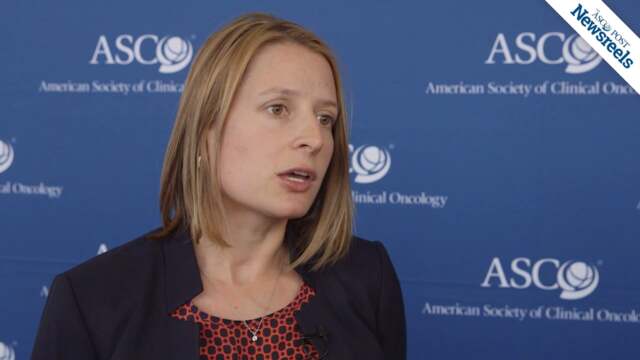
Daniel F. Hayes, MD, ASCO President 2016–2017, on His Goals for the Coming Year
2016 ASCO Annual Meeting
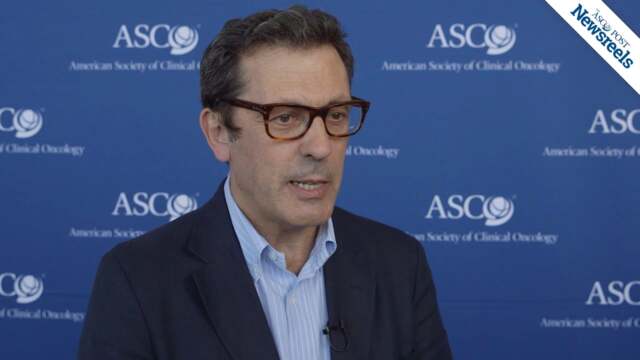
Newly elected ASCO President Daniel F. Hayes, MD, of the University of Michigan Health System Comprehensive Cancer Center, talks about his vision for the society during his tenure.
Luis G. Paz-Ares, MD, PhD, of the Hospital Universitario 12 De Octubre, discusses study findings on adding necitumumab to gemcitabine and cisplatin chemotherapy in the first-line treatment of patients with stage IV squamous non-small cell lung cancer.
To see Dr. Paz-Ares discuss this video in Spanish, please click here.
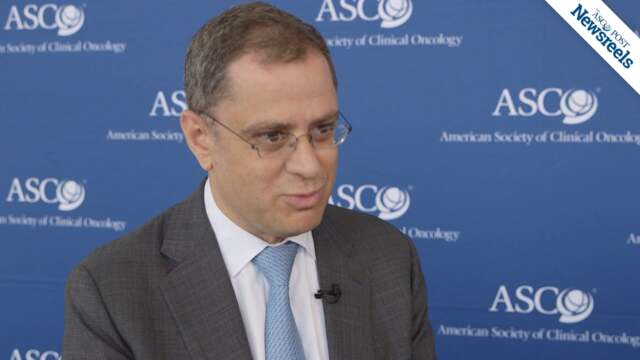
Ghassan K. Abou-Alfa, MD, of Memorial Sloan Kettering Cancer Center, discusses findings of this phase III study of sorafenib plus doxorubicin versus sorafenib in patients with advanced hepatocellular carcinoma (Abstract 4003).
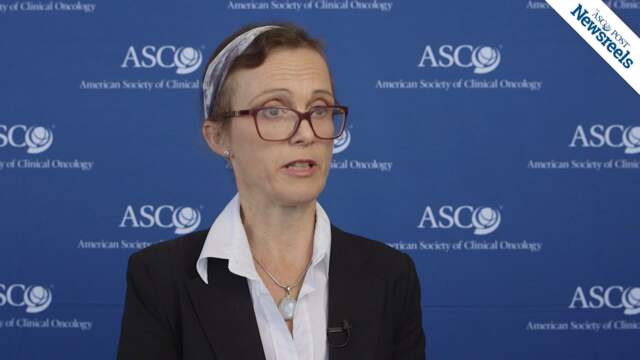
Helen MacKay, MD, of the Sunnybrook Odette Cancer Centre, discusses findings from this phase II study of intraperitoneal vs intravenous chemotherapy following neoadjuvant chemotherapy and optimal debulking surgery in patients with epithelial ovarian cancer (Abstract LBA5503).
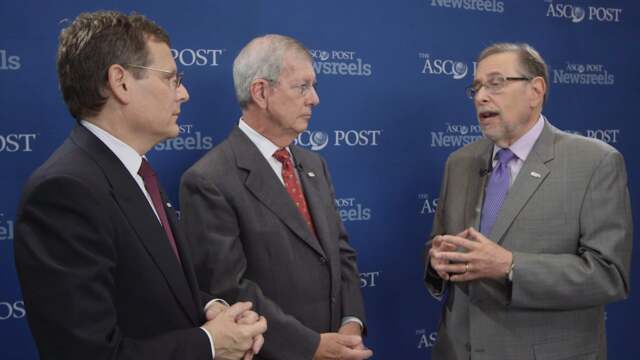
Richard L. Schilsky, MD (right), Chief Medical Officer of ASCO, talks with incoming ASCO CEO Clifford A. Hudis, MD (left) and outgoing CEO Allen S. Lichter, MD (center) about the passing of the torch and their perspectives on past accomplishments and future goals of the society.
Maria Clemence Schwaederle, PharmD, of the University of California, San Diego, discusses an analysis of 13,203 patients in phase I clinical trials, which showed that a personalized strategy led to improved response rate and progression-free survival (Abstract 11520).