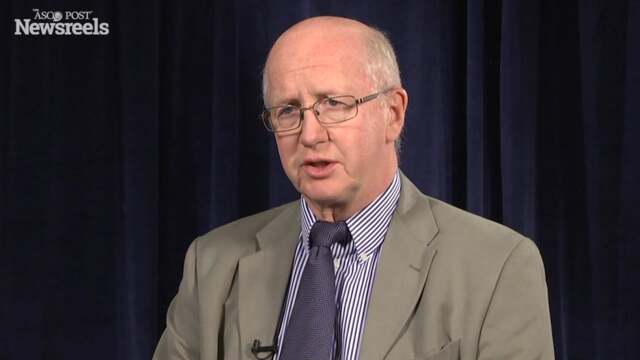
Hans Wildiers, MD, PhD on the TH3RESA Study: Final OS Results
2015 San Antonio Breast Cancer Symposium
Hans Wildiers, MD, PhD, of the University Hospitals, Leuven, discusses this phase III study on the use of ado-trastuzumab emtansine vs treatment of physician’s choice in previously treated HER2-positive metastatic breast cancer (Abstract S5-05).
Jame Abraham, MD
Jame Abraham, MD, of the Cleveland Clinic, discusses the 10-year follow-up of this trial, and the long-term benefit and safety of adding trastuzumab to the adjuvant treatment of HER2-positive early breast cancer (Abstract S5-04).
Clifford A. Hudis, MD, and Joseph A. Sparano, MD
Clifford A. Hudis, MD, of Memorial Sloan Kettering Cancer Center, and Joseph A. Sparano, MD, of Montefiore Medical Center, discuss this study of high-risk premenopausal luminal A breast cancer patients receiving adjuvant chemotherapy (Abstract S1-08).
Gunter von Minckwitz, MD
Gunter von Minckwitz, MD, of the German Breast Group, discusses data from this phase II trial investigating the addition of carboplatin to neoadjuvant therapy for triple-negative and HER2-positive early breast cancer (Abstract S2-05).
Patricia A. Ganz, MD
Patricia A. Ganz, MD, of the University of California at Los Angeles, discusses this clinical trial of anastrozole vs tamoxifen in postmenopausal women with ductal carcinoma in situ undergoing lumpectomy plus radiotherapy (Abstract S6-04).
Mitchell Dowsett, PhD
Mitchell Dowsett, PhD, of the Royal Marsden Hospital discusses the EndoPredict test, which has improved performance compared with the widely used Oncotype Dx test (Abstract S3-01).