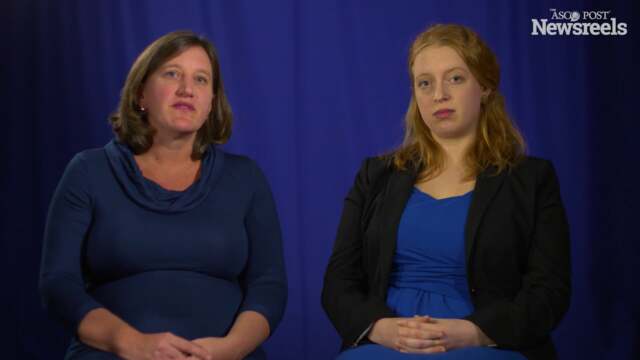
Judith Vick, MD Candidate, and Rachelle E. Bernacki, MD
Judith Vick, MD Candidate, of Johns Hopkins University School of Medicine, and Rachelle E. Bernacki, MD, of Dana-Farber Cancer Institute, discuss a tool that could help clinicians identify seriously ill patients who would benefit from conversations about their goals and values (Abstract 8).
Lorenzo Cohen, MD
Lorenzo Cohen, MD, of The University of Texas MD Anderson Cancer Center, discusses nonpharmacologic approaches to symptom control. Techniques such as acupuncture for managing pain and chemotherapy-induced nausea and vomiting, or yoga and meditation to help improve quality of life, can be safely integrated into oncology care.
Lawrence H. Einhorn, MD
Lawrence H. Einhorn, MD, of Indiana University Simon Cancer Center, discusses the ways in which a dedicated palliative radiation consult service can improve the quality of palliative cancer care (Abstract 110).
Judith Paice, PhD, RN
Judith Paice, PhD, RN, of Northwestern University, reviews the current principles on assessing and treating neuropathic pain in cancer.
Anthony L. Back, MD
Anthony L. Back, MD, of Seattle Cancer Care Alliance, summarizes a general session on best practices and novel tools for enhancing communication between patients and oncology providers (Abstracts 8,9, 39).