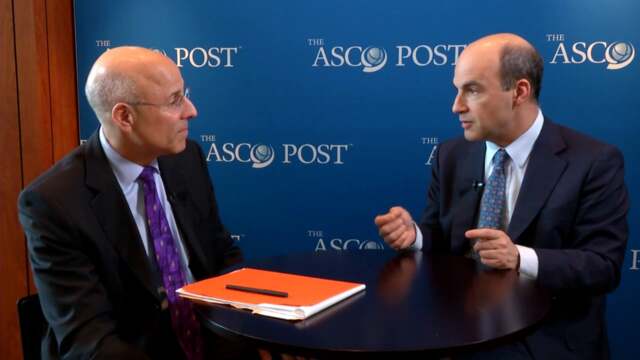
Samuel M. Silver, MD, PhD, and Margaret A. Tempero, MD, on Multidisciplinary Management of Pancreatic Cancer
2015 NCCN Annual Conference
Samuel M. Silver, MD, PhD, of the University of Michigan Comprehensive Cancer Center, and Margaret A. Tempero, MD, of the UCSF Helen Diller Family Comprehensive Cancer Center, discuss drugs developed for hematologic malignancies that have activity in pancreatic cancer, vaccines, neoadjuvant treatment, and the need to focus on activated RAS.
Related Videos
Thomas A. D’Amico, MD
Thomas A. D’Amico, MD, of Duke Cancer Institute, discusses the superior efficacy of thoracoscopic lobectomy. This minimally invasive procedure is used in only 50% of lung cancer surgeries in the United States, in 30% of procedures in Asia, and in as few as 10% to 20% of procedures in Europe.
Gregory A. Otterson, MD
Gregory A. Otterson, MD, of The Ohio State University Comprehensive Cancer Center and the James Cancer Hospital and Solove Research Institute, discusses the evolution of lung cancer treatment from adjuvant chemotherapy to immunotherapy and the clinical trials underway.
William G. Wierda, MD, PhD
William G. Wierda, MD, PhD, of The University of Texas MD Anderson Cancer Center, discusses the latest information on managing CLL and his optimism that a cure is in sight.
Crystal S. Denlinger, MD
Crystal S. Denlinger, MD, of Fox Chase Cancer Center, discusses cardiac toxicities in cancer survivors, a new topic for the NCCN Survivorship Guidelines this year, and the need for more research on this important side effect, including prevention and surveillance.
Clifford Goodman, PhD, and Peter B. Bach, MD, MAPP
Clifford Goodman, PhD, of the The Lewin Group, and Peter B. Bach, MD, MAPP, of Memorial Sloan Kettering Cancer Center, discuss the affordability of cancer care, the “financial toxicities” of high drug prices, and what could and should be done about it.