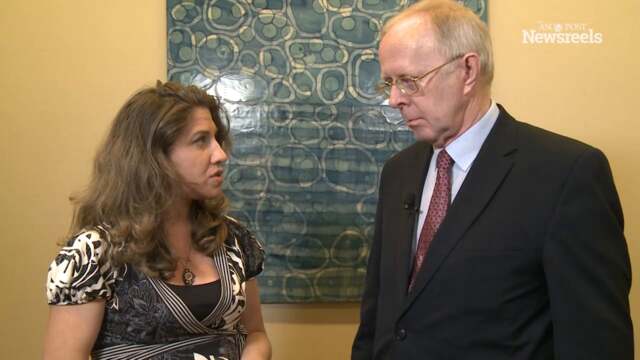
Allison J. Applebaum, PhD, and William S. Breitbart, MD, on Creating Meaning-Centered Psychotherapy for Cancer Patients
2015 IPOS APOS World Congress of Psycho-Oncology
Allison J. Applebaum, PhD, and William S. Breitbart, MD, of Memorial Sloan Kettering Cancer Center, discuss the early days of this new treatment for despair and distress in cancer patients.
Related Videos
Allison J. Applebaum, PhD, and William S. Breitbart, MD
Allison J. Applebaum, PhD, and William S. Breitbart, MD, of Memorial Sloan Kettering Cancer Center, explain how they brought this new treatment to help stressed caregivers of loved ones with cancer.
Christopher J. Recklitis, PhD, MPH
Christopher J. Recklitis, PhD, MPH, of the Dana-Farber Cancer Institute, discusses what is known about suicide after cancer, the risks faced by prostate cancer patients within the first year after diagnosis, and challenges across the treatment trajectory
Allison J. Applebaum, PhD, and William S. Breitbart, MD
Allison J. Applebaum, PhD, and William S. Breitbart, MD, of Memorial Sloan Kettering Cancer Center, discuss a meaning-centered psychotherapy workshop they conducted for an international group of clinicians.
Jimmie C. Holland, MD, and Tammy A. Schuler, PhD
Jimmie C. Holland, MD, of Memorial Sloan Kettering Cancer Center, and Tammy A. Schuler, PhD, of the Association for Behavioral and Cognitive Therapies, demonstrate a dialogue between a clinician and a recently diagnosed cancer patient whose distress was discovered with the use of the Distress Thermometer.
Wendy Lichtenthal, PhD, and David Kissane, MD
Wendy Lichtenthal, PhD, of Memorial Sloan Kettering Cancer Center, and David Kissane, MD, of Monash University, discuss the importance of and challenges with attending to the whole family during palliative care.